
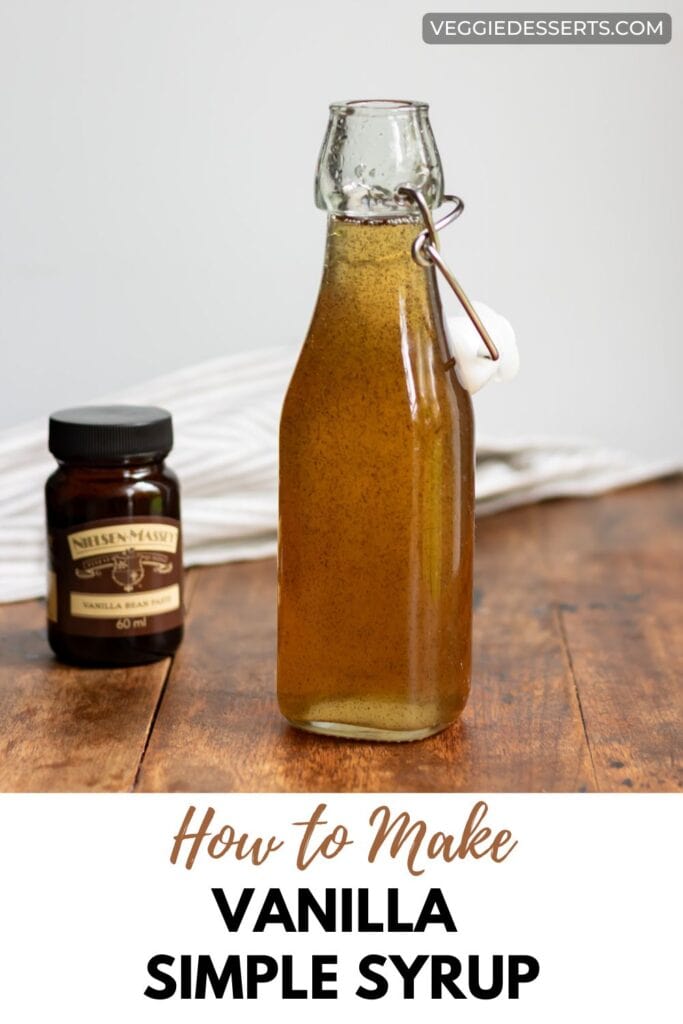
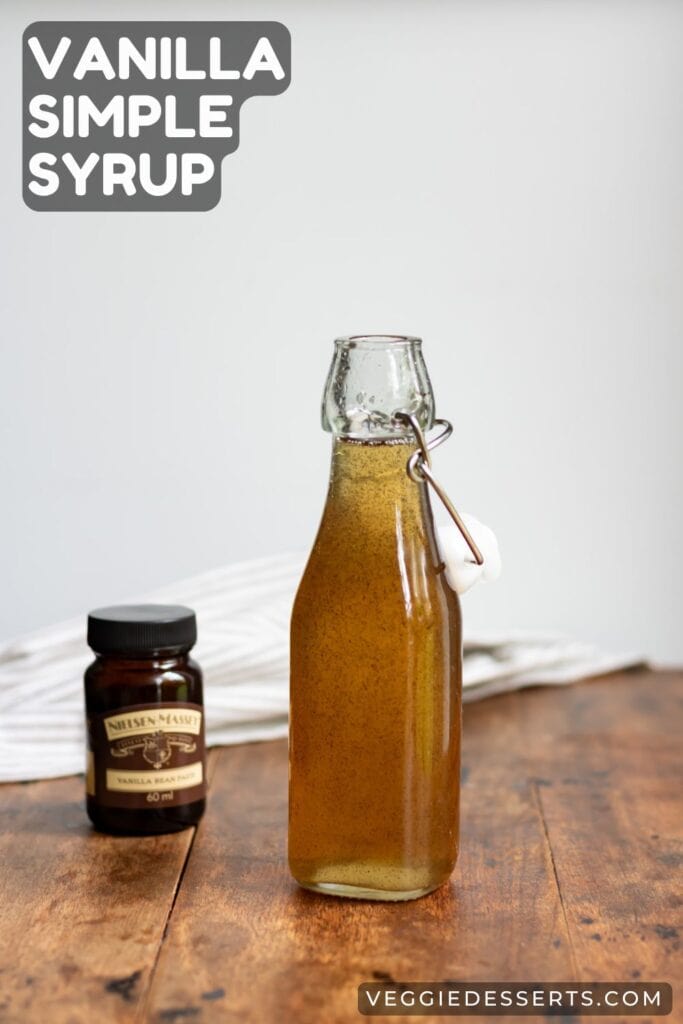
Vanilla Syrup is an easy homemade simple syrup that's perfect for coffees, cocktails, iced drinks, baking, fruit, and desserts. Ready in just 15 minutes!
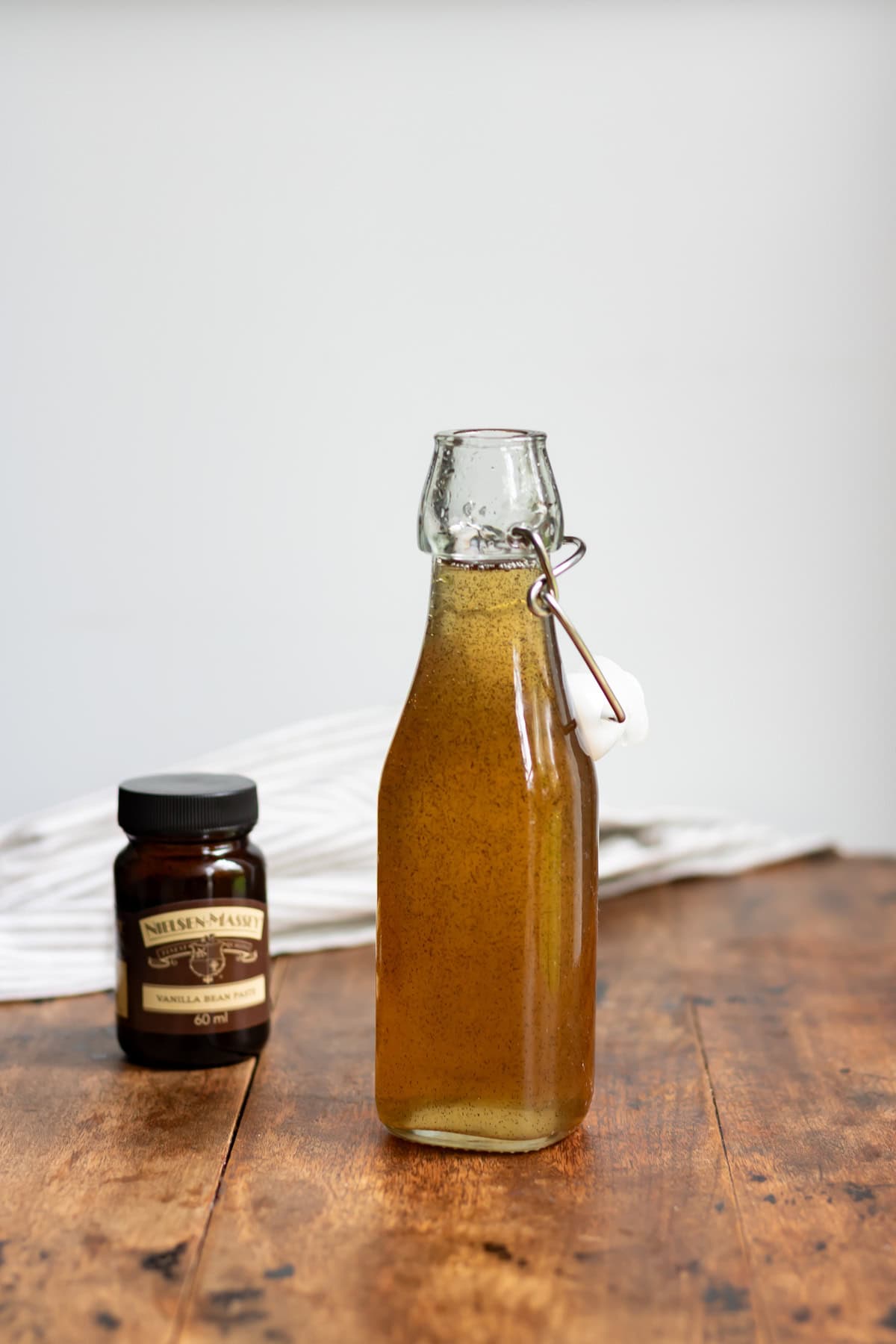
Homemade vanilla syrup is one of the most useful things I keep on hand. It feels indulgent and special, but it is really quick and easy to make.
I use it in coffee, but it also ends up in iced tea, cocktails, fruit salad, whipped cream, and even brushed over cakes.
It takes only a few ingredients and about 15 minutes to make, but the flavor is far better than most bottled syrups from the supermarket.
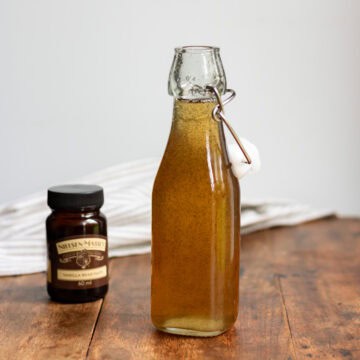
This homemade vanilla simple syrup has a rich vanilla flavor. Vanilla bean paste gives the syrup a richer taste and those tiny specks that make it feel a little more special, but pure vanilla extract also works beautifully.
If you want a deeper flavor, you can steep a split vanilla bean pod directly in the syrup while it cools!
This recipe is simple enough for everyday use but also nice enough for gifting in a pretty bottle.
If you're looking for more tasty and easy homemade syrup recipes, be sure to check out Strawberry Syrup, Pumpkin Spice Syrup, Toasted Coconut Syrup or Raspberry Syrup.
Check out this 101 guide to How to Make Syrup (Simple Recipe + 30 Flavor Variations).
Jump to:
Why You'll Love This Recipe
- Homemade vanilla syrup costs significantly less than café syrups and specialty bottled brands.
- The flavor tastes cleaner and more natural than many commercial syrups.
- Vanilla syrup dissolves instantly into iced drinks. A small amount transforms coffee, tea, cocktails, oatmeal, yogurt, and desserts.
- Vanilla bean paste creates a richer café-style flavor.
- The recipe uses pantry staples you probably already have.
- Glass bottles of homemade vanilla syrup make thoughtful edible gifts.
- This syrup works in both hot and cold beverages.
- Making your own syrup means no preservatives or stabilizers.
Vanilla
Vanilla is one of the most widely loved baking and dessert flavors in the world, but not all vanilla products behave the same way in syrup.
Vanilla extract gives a clean, classic flavor and is the most practical option for everyday batches.
Vanilla bean paste contains concentrated vanilla plus real vanilla seeds, giving the syrup a deeper aroma and visible specks.
Whole vanilla bean pods provide the richest flavor, especially when steeped slowly, though they are more expensive.
Madagascan vanilla tends to taste creamy and rich, while Tahitian vanilla is more floral and delicate.
Ingredients
- Vanilla Bean Paste or Pure Vanilla Extract. Vanilla bean paste gives stronger flavor and visible vanilla flecks. Pure vanilla extract works well too. Avoid imitation vanilla if possible because the flavor can taste harsh once concentrated in syrup.
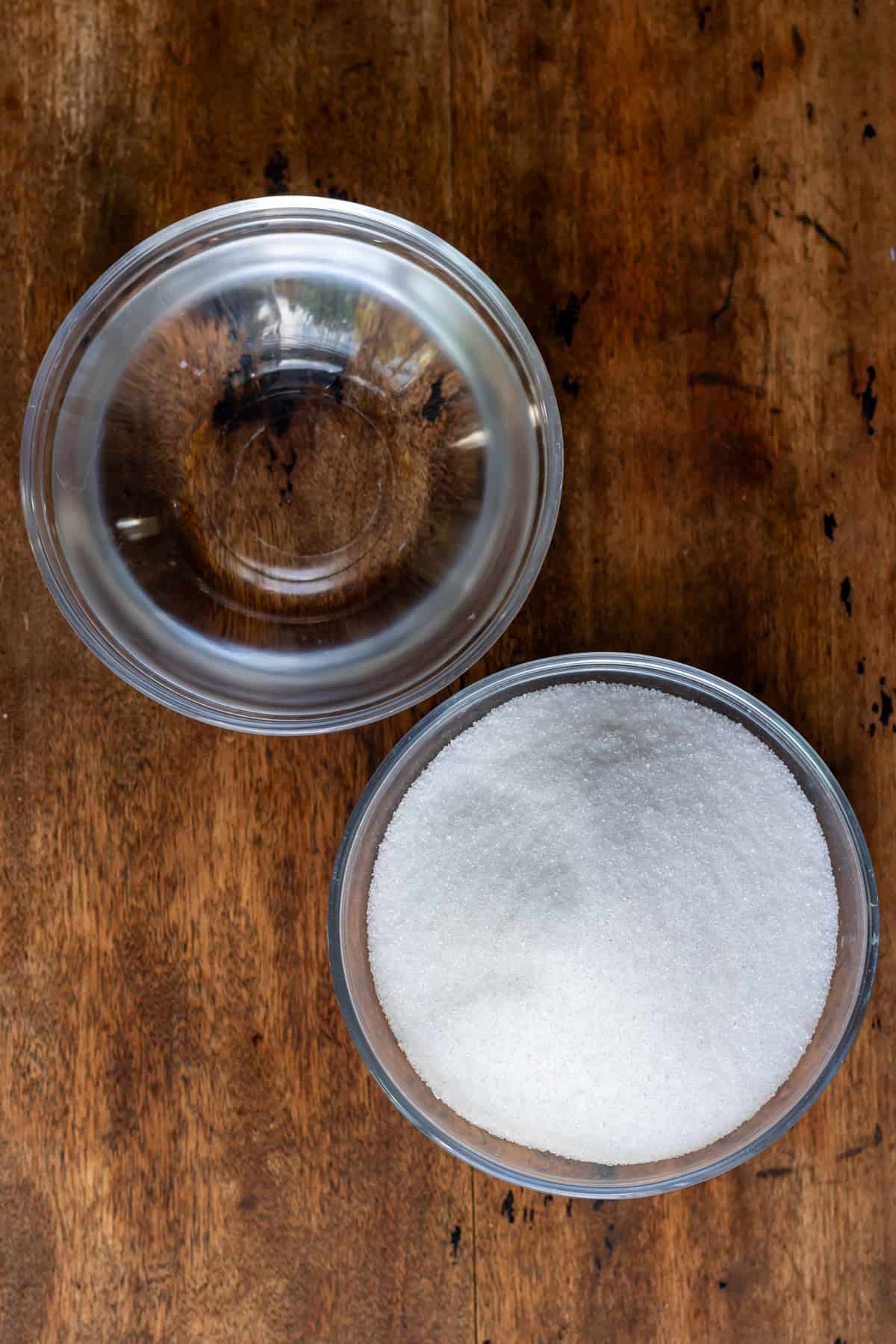
- Granulated White Sugar. White sugar creates a neutral sweetness that lets the vanilla stand out clearly. You can swap some of it for brown sugar for a warmer caramel flavor.
- Water. Water forms the base of the syrup and dissolves the sugar. Filtered water gives the cleanest flavor if your tap water has a strong mineral taste.
See the recipe card for quantities.
Instructions
Follow this step-by-step photo tutorial, then scroll down to the recipe card for the full ingredients list and method.
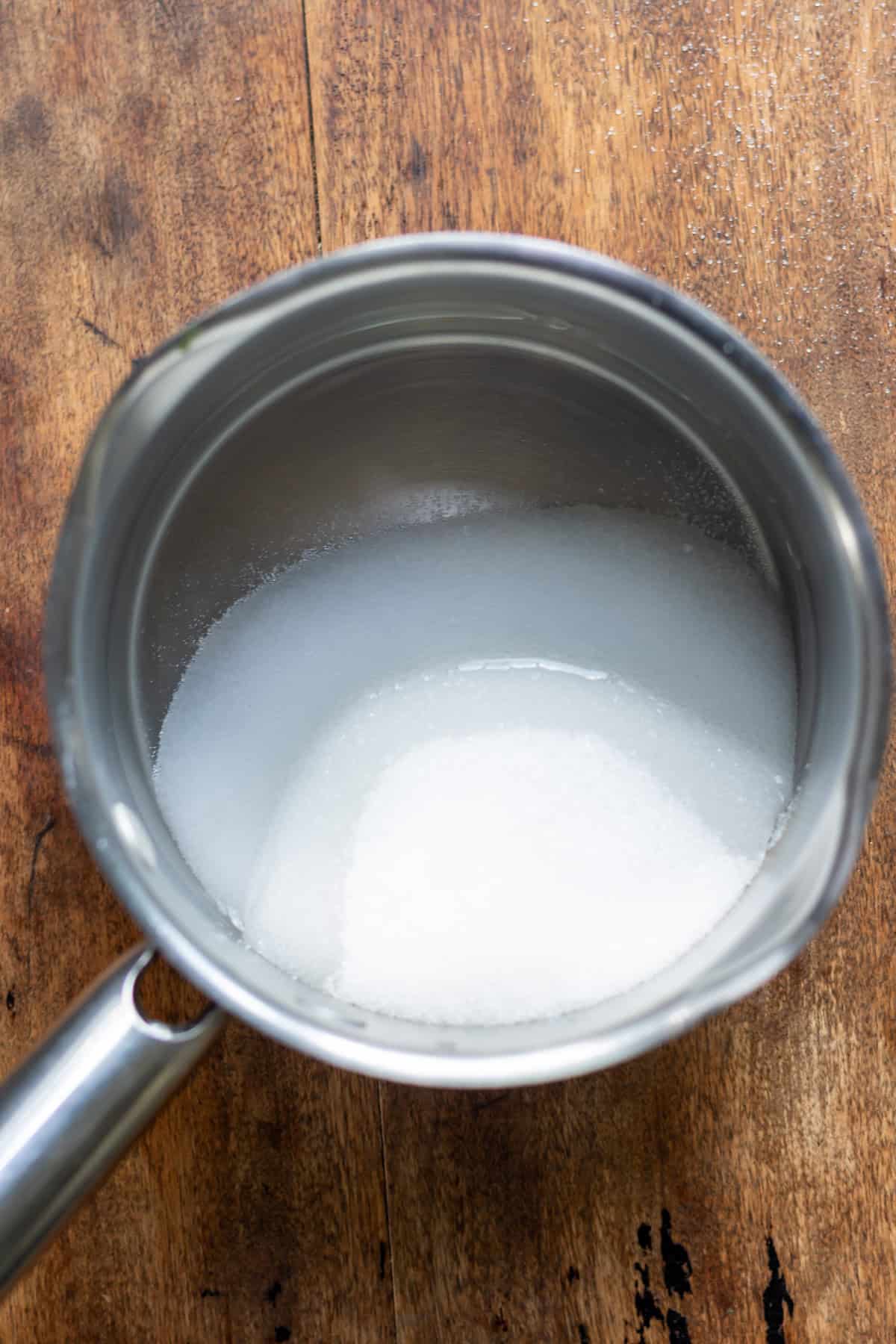
Combine the sugar and water in a small saucepan.
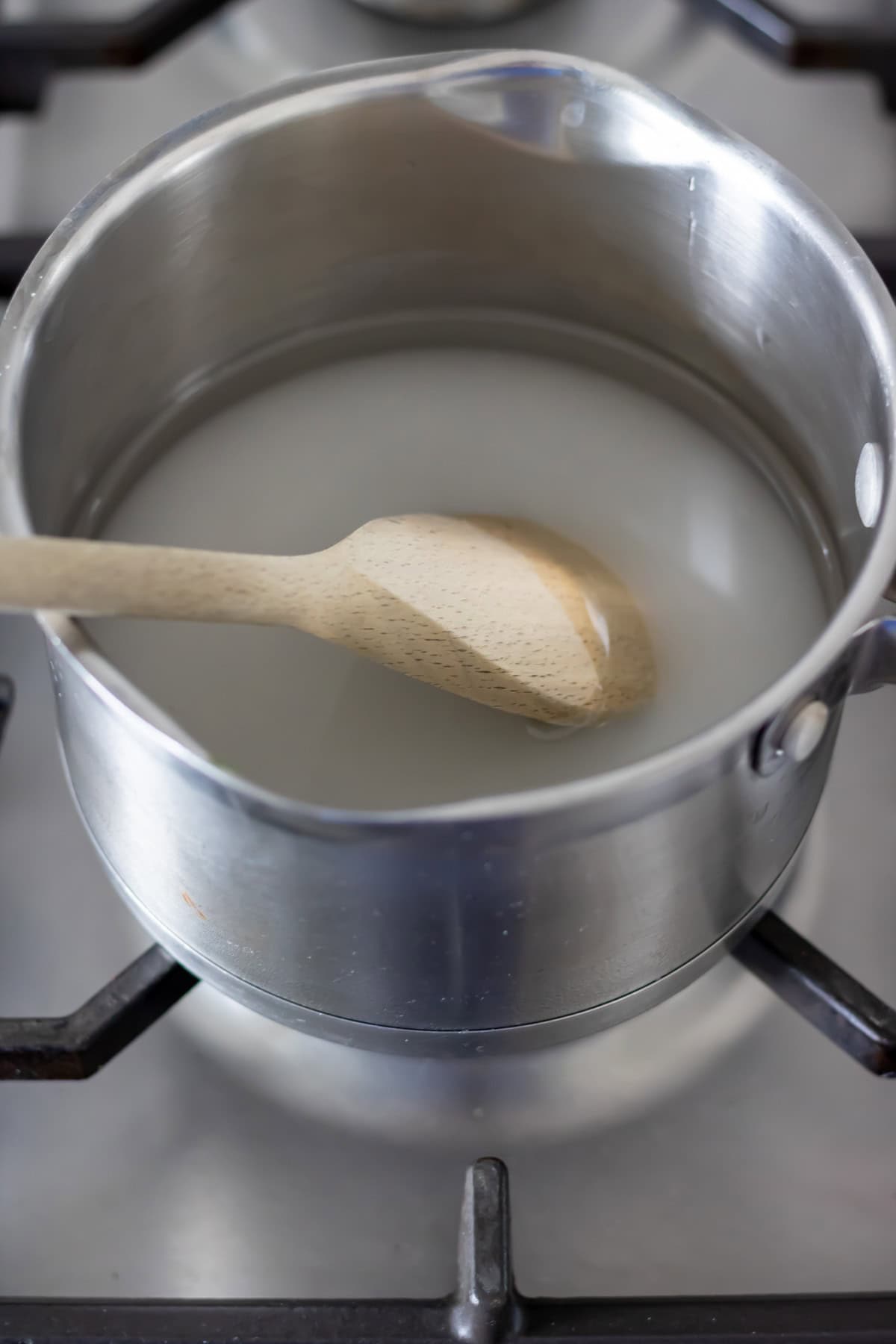
Stir over medium heat until the sugar dissolves.
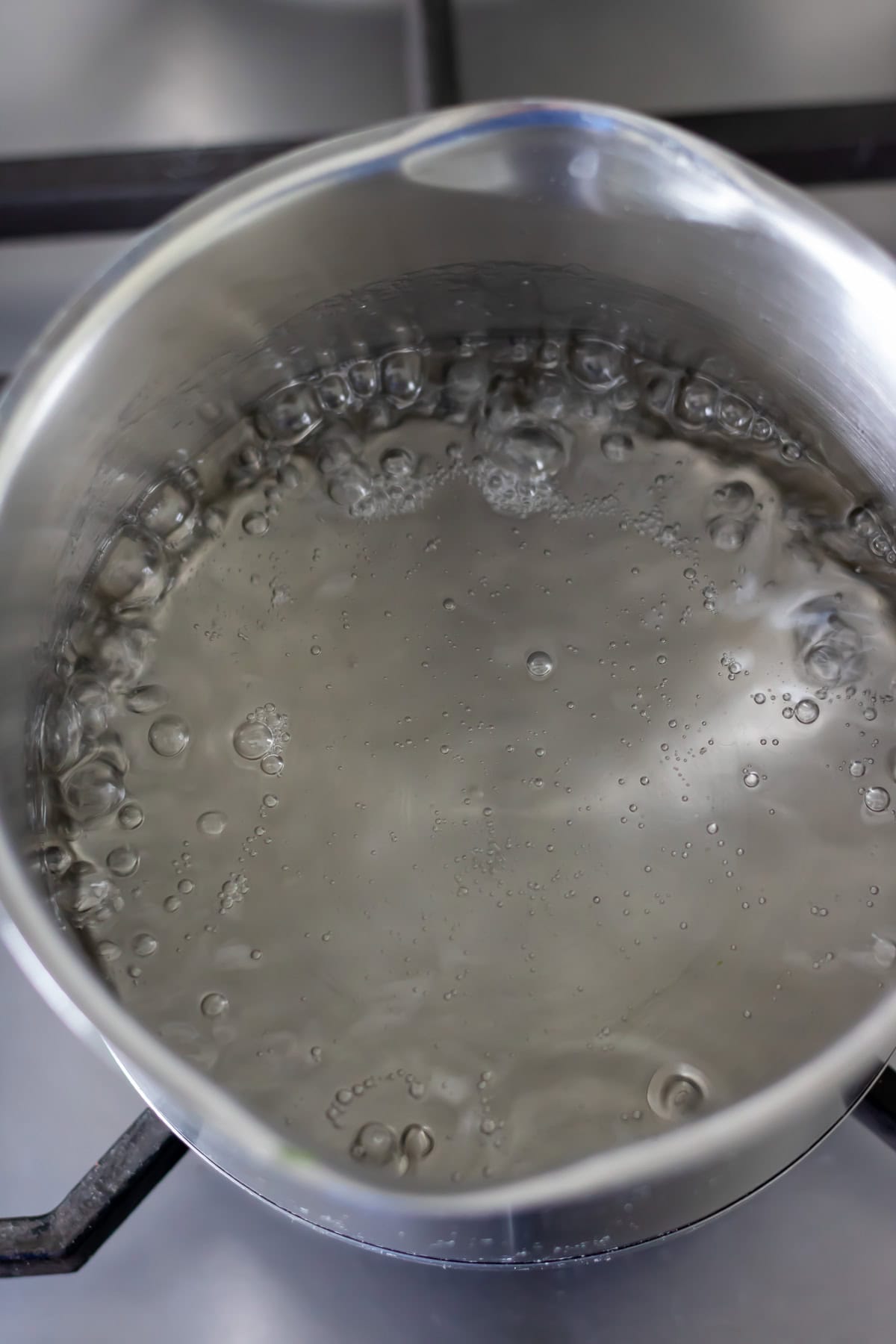
Bring the mixture to a gentle boil. Reduce the heat and simmer for about 10 minutes.
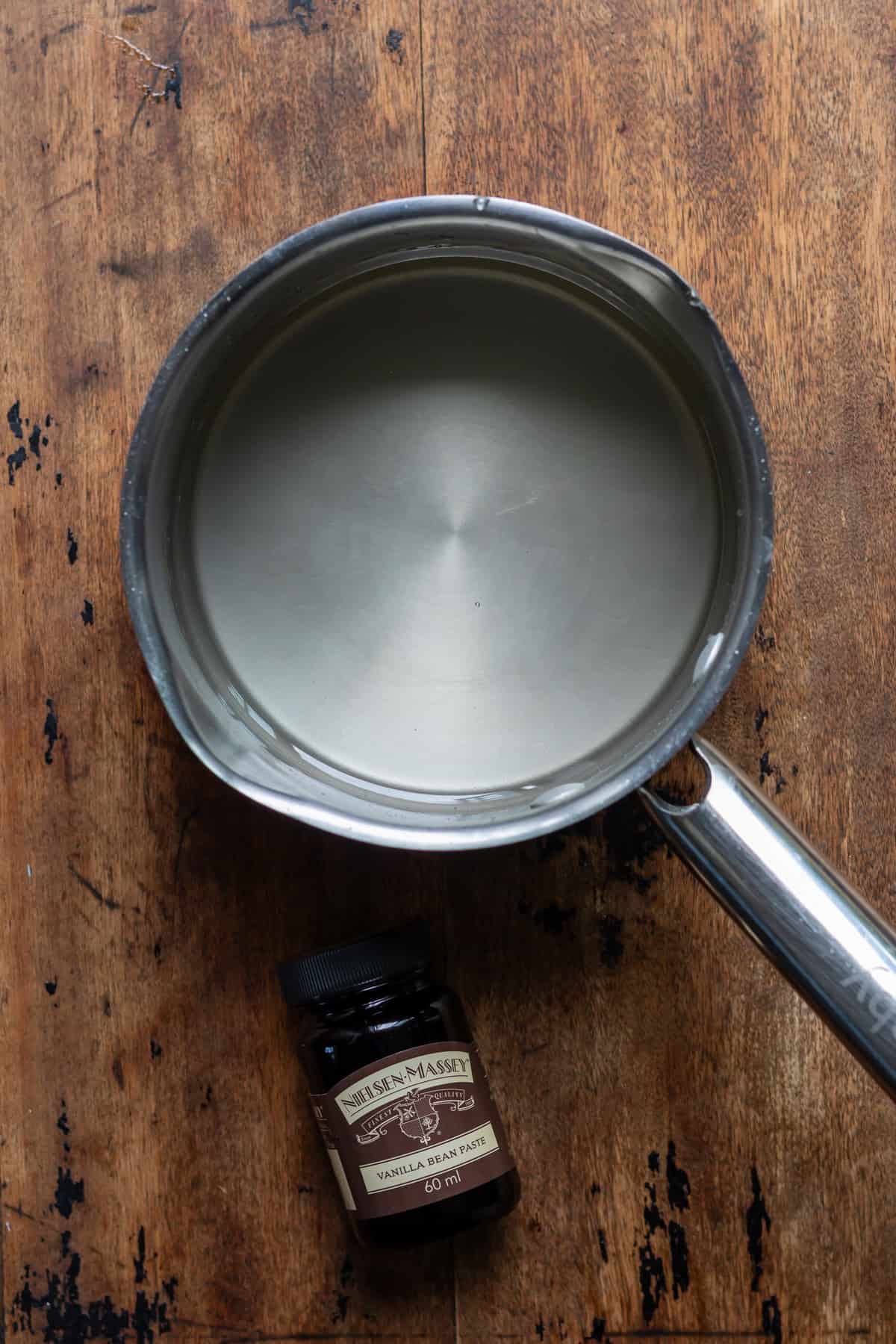
Remove the pan from the heat.
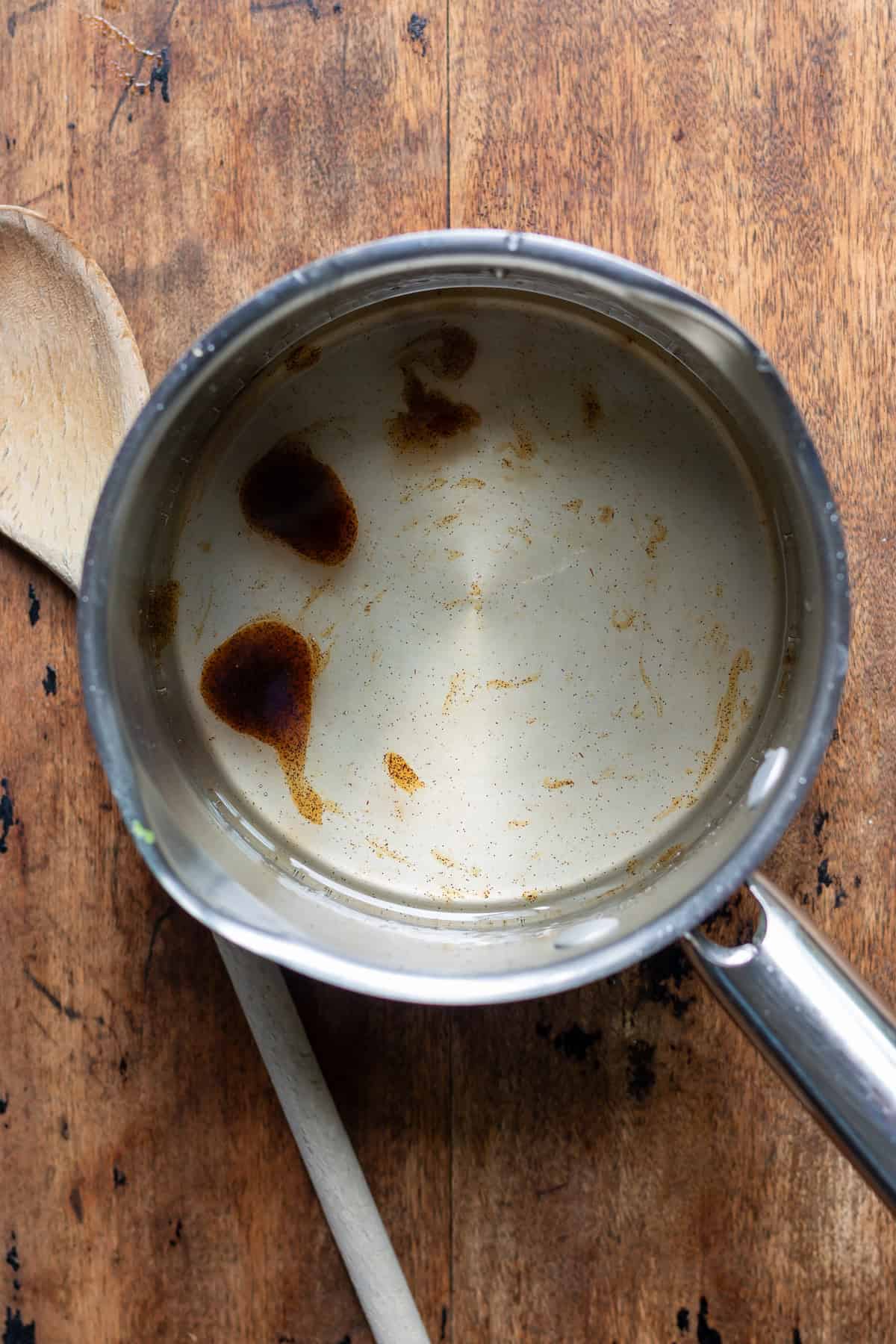
Stir in the vanilla extract or vanilla bean paste.
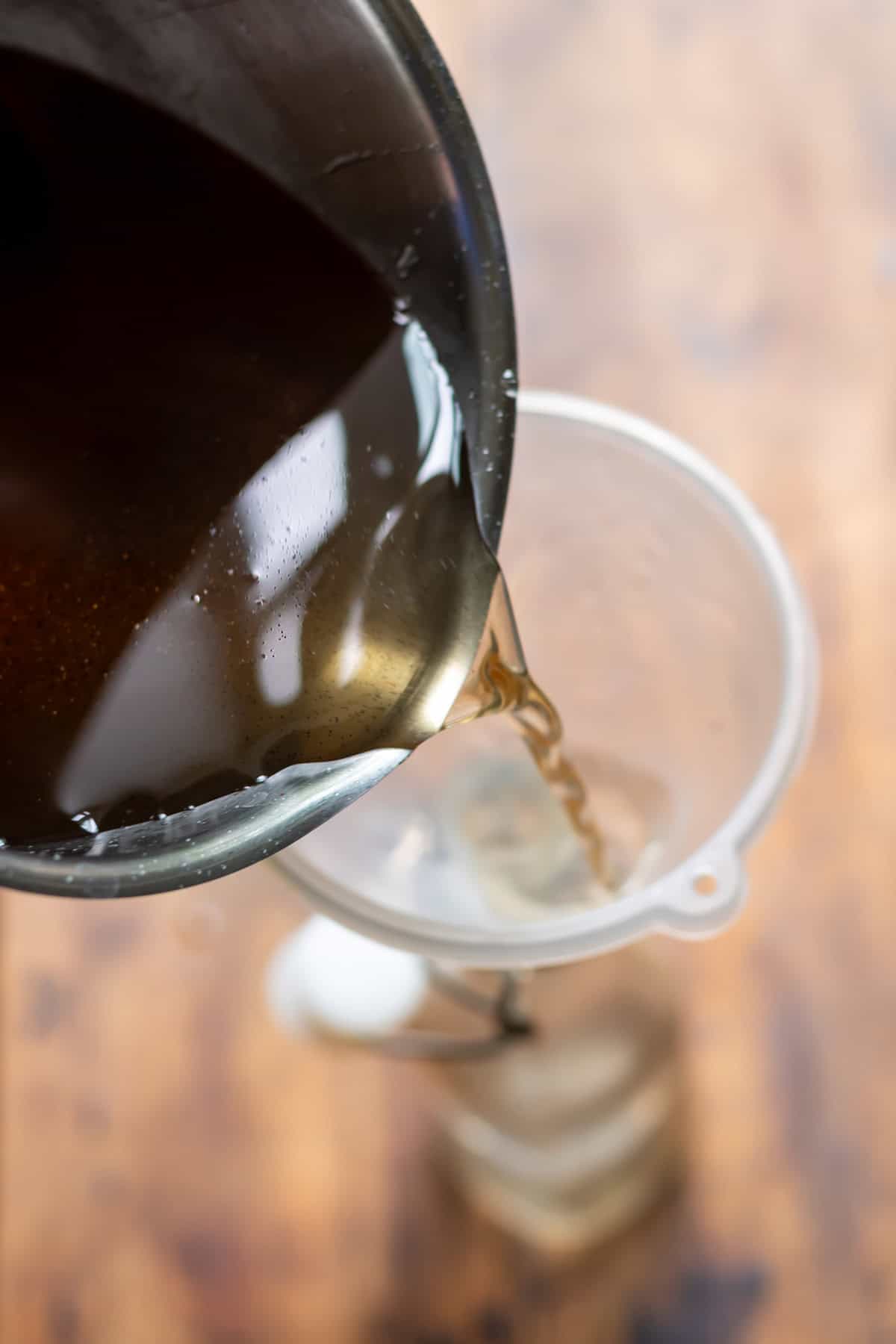
Let the syrup cool completely. Pour into a clean bottle or jar. Store in the fridge.
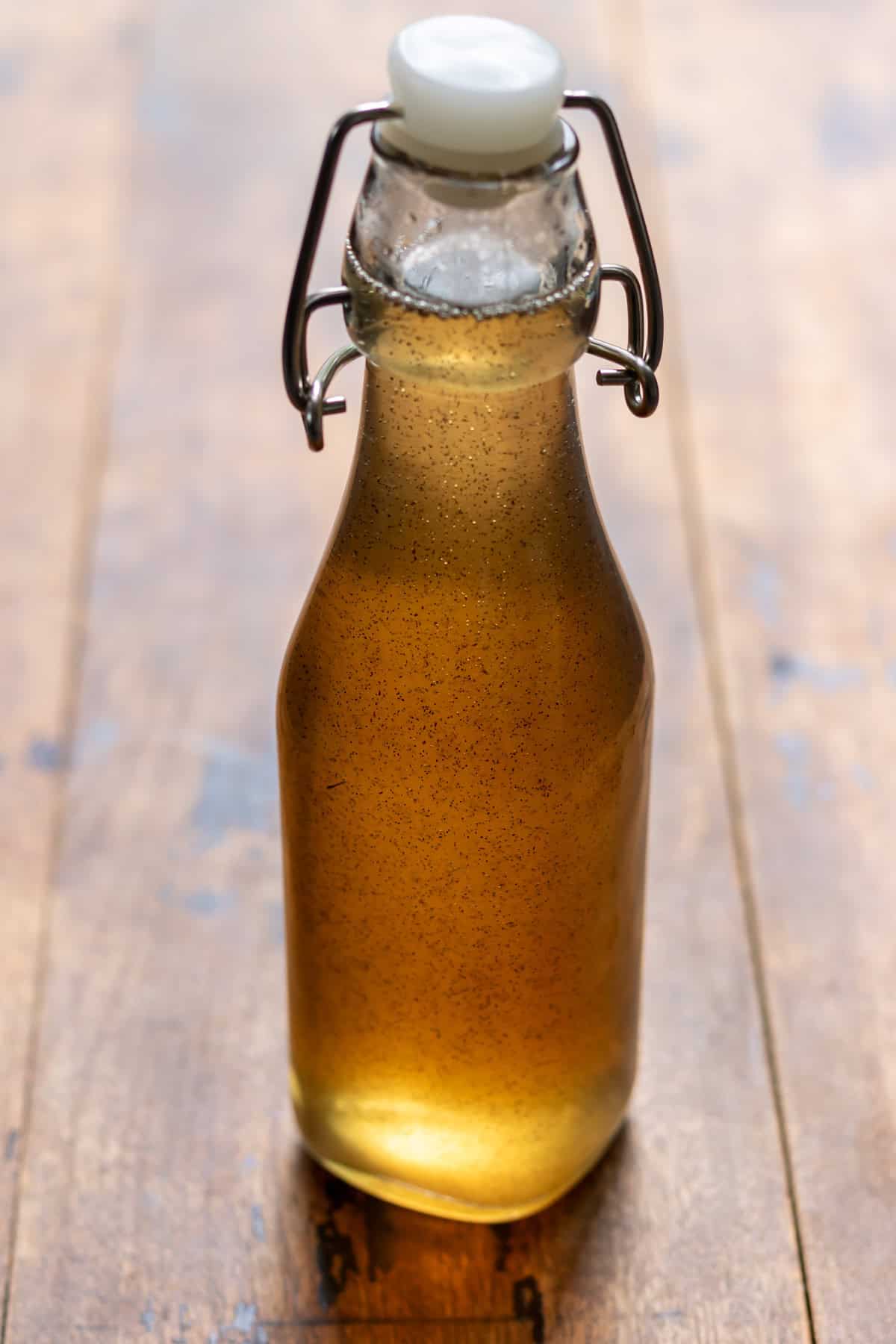
Ways to Use Vanilla Syrup
- Oatmeal and Porridge. Stir vanilla syrup into warm oats instead of brown sugar or honey.
- Homemade Iced Vanilla Latte. Mix espresso, milk, ice, and vanilla syrup for an easy café-style iced latte.
- Espresso Martini. Add vanilla syrup to espresso martinis to soften the bitterness and add warmth and sweetness.
- Vanilla Milkshake. Blend vanilla syrup with vanilla ice cream and milk for a smoother flavor than granulated sugar gives.
- Pancakes and Waffles. Drizzle vanilla syrup over pancakes or waffles.
- Fruit Salad Dressing. Stir a spoonful of vanilla syrup into citrus juice and toss with fresh fruit for a lightly sweet dressing. Or serve with a Fruit Platter (Fruit Tray).
- Overnight Oats. Use vanilla syrup instead of sugar or honey in overnight oats for an easy breakfast upgrade.
- Cake Soak Syrup. Brush it over sponge cakes or cupcakes to help keep them moist and flavorful.
- Yogurt Bowls. Drizzle vanilla simple syrup over Greek yogurt, granola, and berries. Or try it on Whipped Cottage Cheese with Fruit.
- Cocktails and Mocktails. Use vanilla syrup in bourbon cocktails, mojitos, or alcohol-free sparkling drinks. Try it in some of these Poolside Drinks!
How to Make Vanilla Syrup With a Vanilla Bean
Using a whole vanilla bean gives the syrup a deeper, more rounded flavor.
To make it with a vanilla pod:
- Split one vanilla bean lengthwise.
- Scrape the seeds into the saucepan.
- Add both the seeds and pod while simmering.
- Let the pod steep in the syrup as it cools.
- Remove the pod before bottling, or leave it inside for stronger flavor.
If you leave the pod in the bottle, the flavor intensifies over time.
How to Make Vanilla Syrup Suitable for Gifting
Yes. It makes a lovely edible gift, especially for coffee lovers, bakers, or holiday hampers. This recipe is best gifted as a refrigerated syrup rather than a shelf-stable pantry product.
For gifting:
- Use clean, sterilised glass bottles or jars.
- Let the syrup cool completely before bottling.
- Include a label with the date made.
- Add storage instructions stating "Keep Refrigerated".
- Recommend using within 4 weeks.
- Vanilla bean paste or a whole vanilla pod makes the syrup look especially attractive for gifting.
If you want a syrup designed for pantry storage, you would need either:
- A higher sugar ratio, usually 2:1 sugar to water.
- Proper canning and bottling methods.
Even richer syrups are often refrigerated after opening for best quality.
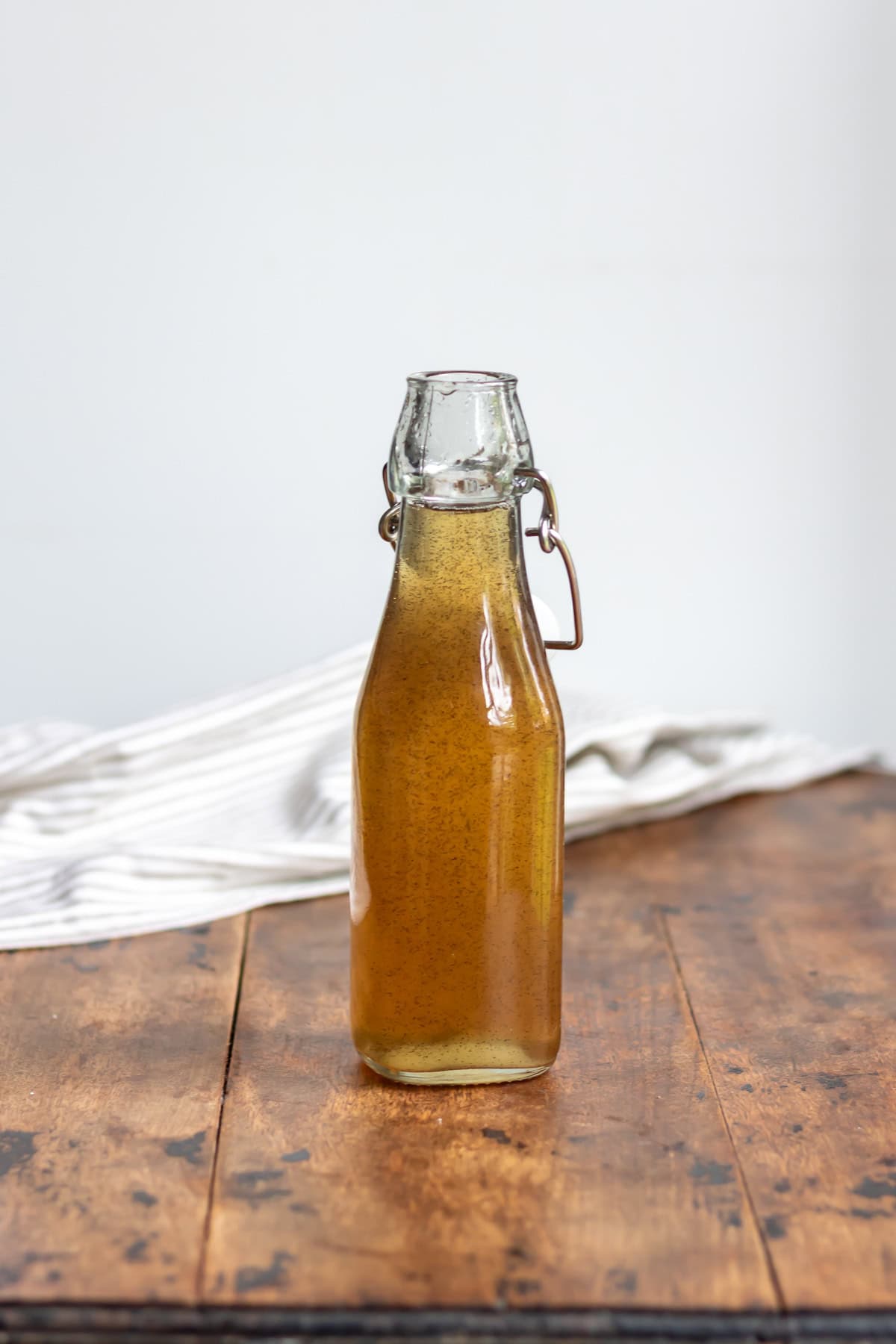
Variations
- Brown Sugar Vanilla Syrup. Replace half or all of the white sugar with light brown sugar for a deeper caramel flavor that works especially well in coffee and autumn drinks.
- Vanilla Cinnamon Syrup. Add 1 cinnamon stick to the saucepan while the syrup simmers, then remove before bottling. For a stronger spice flavor, let the cinnamon stick steep while the syrup cools.
- Vanilla Almond Syrup. Stir in ¼ teaspoon pure almond extract along with the vanilla after removing the syrup from the heat. Almond extract is strong, so a little goes a long way.
- Salted Vanilla Syrup. Stir in a small pinch of fine sea salt after cooking. This softens the sweetness and gives the syrup a more café-style flavor.
Storage
Homemade vanilla syrup should be stored in the fridge in an airtight glass container. Properly stored, it keeps well for around 4 weeks.
For freezing:
- Freeze in ice cube trays for small portions.
- Transfer frozen cubes to a freezer bag.
- Thaw in the fridge overnight.
For make-ahead prep:
- Prepare the syrup several days before a party or gathering.
- Make double batches for holiday hosting.
- Keep small bottles ready for coffee bars or brunch setups.
Recipe Tips
- Add the vanilla after removing the syrup from heat for fresher flavor.
- Simmer gently rather than boiling aggressively to avoid overly thick syrup.
- Use vanilla bean paste for stronger café-style flavor.
- Sterilize bottles with boiling water before filling for longer freshness.
- Let the syrup cool completely before sealing containers.
- If crystals form, warm the syrup gently and stir until smooth.
- For richer syrup, use a slightly higher sugar ratio.
- If using brown sugar, expect a darker syrup with molasses notes.
FAQs
This homemade vanilla syrup is designed as a refrigerated syrup, not a shelf-stable pantry syrup. To make it more shelf stable, you would typically use a higher sugar ratio such as 2 parts sugar to 1 part water, sterilise bottles properly, and use careful bottling methods. Even then, many homemade syrups are still refrigerated after opening for best quality and food safety. For gifting or long-term pantry storage, proper canning procedures are the safest option.
Yes. Brown sugar gives the syrup a deeper caramel flavor. Light brown sugar works especially well in coffee drinks.
Stored in the fridge in a clean airtight container, homemade vanilla syrup generally lasts about 4 weeks.
Many coffee shops use brands like Torani, Monin, or house-made syrups. Homemade syrup is closer to café-style syrups when made with vanilla bean paste.
Yes. Homemade vanilla syrup should be refrigerated after cooling because it does not contain preservatives.
For short periods during serving, yes. For long-term storage, refrigeration is safest.
Simple Syrup Recipes

Sign up for our free newsletter and never miss a recipe!
Plus, you'll get a free eBook: 15 Minute Vegan Dinners!
⭐⭐⭐⭐⭐ If you love this recipe, please leave a five-star rating and review in the comments below! And if you make any modifications, let us know how it went so that we can all benefit from your experience. Happy cooking!
📖 Recipe
Vanilla Syrup
Equipment
- Small pot
- Bottle
- Funnel
Ingredients
- 1 ½ cups water 360 ml
- 1 ½ cups granulated white sugar 300 g
- 2 teaspoons vanilla bean paste or pure vanilla extract
- Optional Vanilla Bean Version: one whole vanilla bean pod split lengthwise
Instructions
- Stir the sugar and water in a small pot, bring to the boil then redue the heat and simmer for 10 minutes.
- Remove the pan form the heat, stir in the vanilla and allow the vanilla syrup to cool.
- Pour the simple syrup into a jar or bottle (I use a funnel), and keep in the fridge for up to 4 weeks.
Notes
- Add the vanilla after removing the syrup from heat for fresher flavor.
- Simmer gently rather than boiling aggressively to avoid overly thick syrup.
- Use vanilla bean paste for stronger café-style flavor.
- Sterilize bottles with boiling water before filling for longer freshness.
- Let the syrup cool completely before sealing containers.
- If crystals form, warm the syrup gently and stir until smooth.
Nutrition
The nutritional information provided is approximate and can vary depending on several factors, so is not guaranteed to be accurate. Please see a registered dietician for special diet advice.
Comments
No Comments