
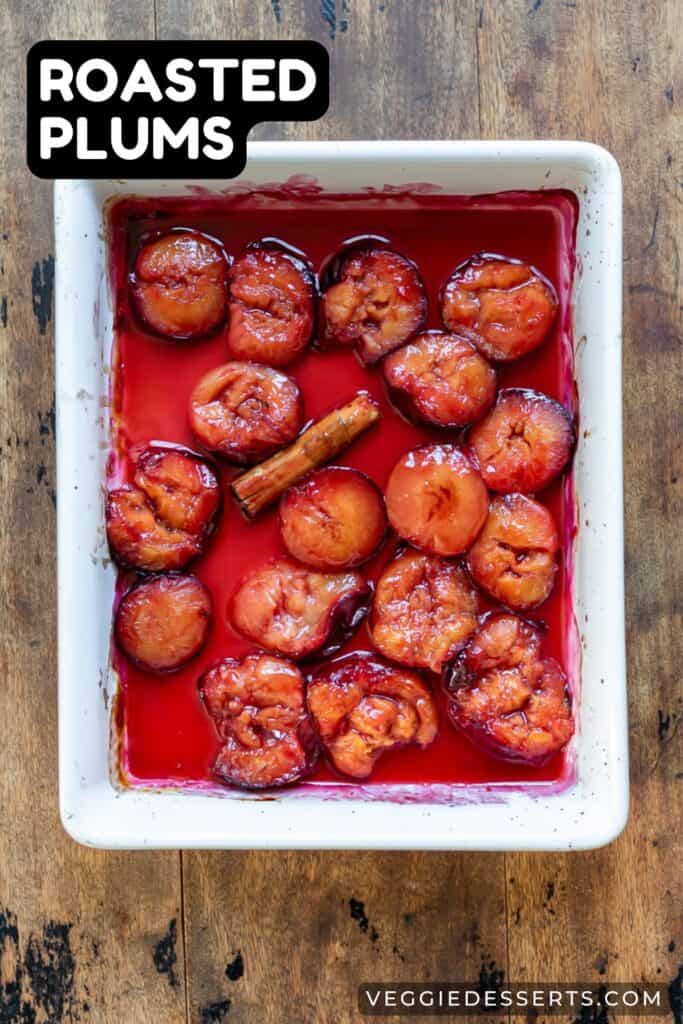
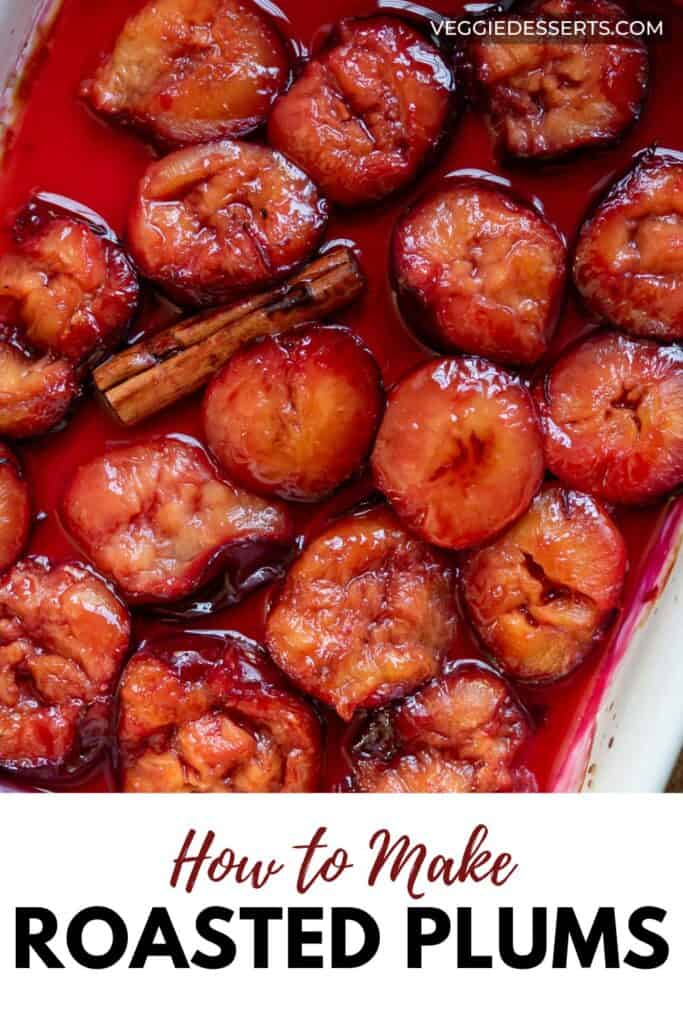
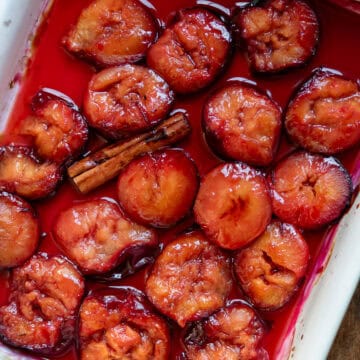
Roasted Plums with honey, cinnamon and vanilla are soft and jammy with a naturally fruity sauce. They're baked in 20 minutes in the oven and are perfect with yoghurt, oatmeal or ice cream.
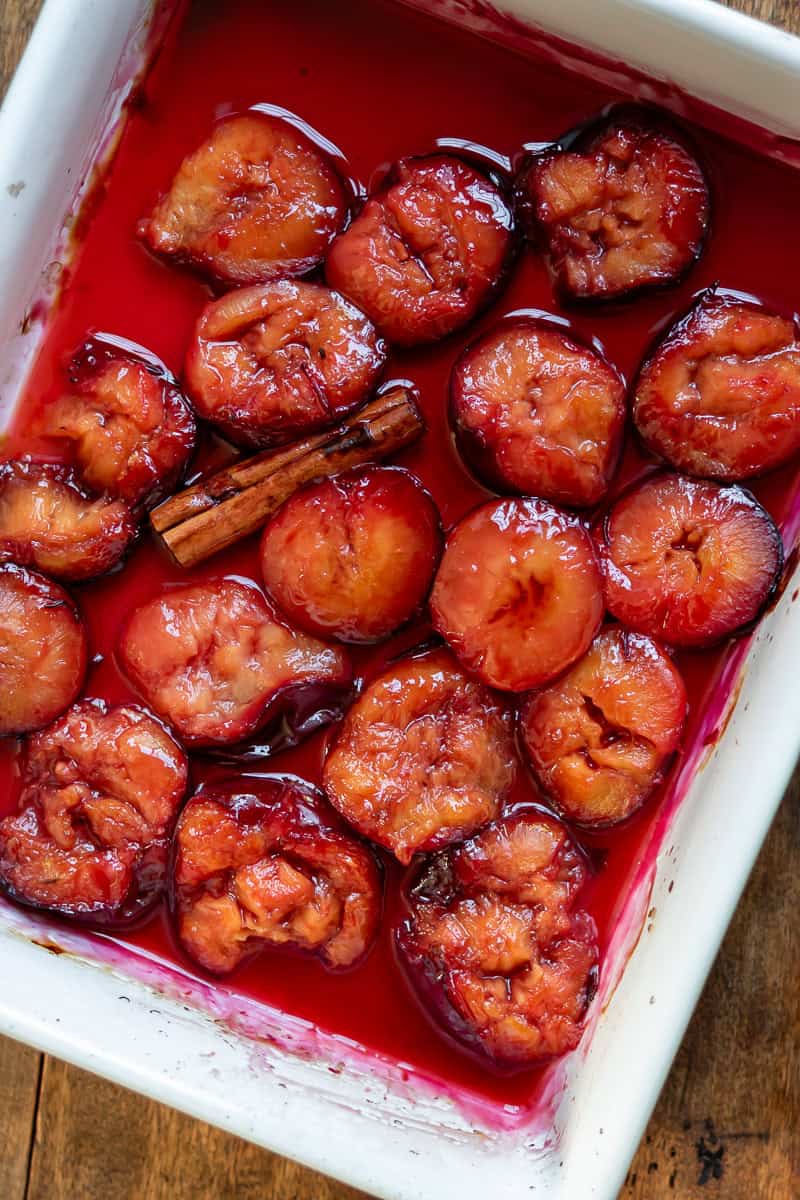
There is quite a difference between a raw plum and a roasted one. Heat softens the flesh, intensifies the fruit's natural sweetness and brings its acidity forward just enough to keep the finished dish from becoming sugary.
The best part, for me, is the juice in the bottom of the baking dish. As the plums roast, their juices mingle with the honey, lemon and vanilla to make a thin sauce. It thickens slightly as it cools, so don't worry if it looks more liquid than expected when the dish first comes out of the oven.
Texture depends partly on the plums you start with. Very ripe fruit becomes soft and almost jammy within 20 minutes. Firmer plums hold their shape more clearly and may need a few extra minutes.
That's why I use the appearance and feel of the fruit rather than relying solely on the timer.
This is particularly useful when I have several plums ripening at once.
Roasting gives fruit that's becoming a little too soft for eating out of hand a new purpose without requiring enough sugar to turn it into jam.
I serve these throughout late summer and early autumn, although they're worth making whenever good plums are available.
They're simple enough for breakfast but, with vanilla ice cream, they become an easy warm dessert.
Before starting, choose a baking dish that holds the plums fairly snugly.
In an oversized tray, the released juices spread into a thin layer and can reduce too quickly. A smaller dish keeps those juices around the fruit, which gives you considerably more sauce to spoon over each serving.
If you have lots of plums to use up, be sure to try Plum Bars, Plum Compote or Plum Syrup.
Jump to:
Why You'll Love This Recipe
- It makes good use of very ripe plums. Fruit that's becoming too soft for the fruit bowl is often ideal for roasting because its sugars are already well developed.
- Most of the sauce makes itself. The plum juices combine with honey, lemon and vanilla in the oven, so there's no separate sauce to prepare.
- You can adjust the sweetness easily. Naturally sweet plums need very little help, while sharper fruit can take a little more honey.
- It works for breakfast and dessert. I serve the same batch with yoghurt in the morning and ice cream after dinner.
- Preparation is minimal. Halving and stoning the plums is the only real prep involved.
- It's naturally adaptable. Maple syrup, different spices and citrus all change the character without changing the basic method.
- Leftovers are genuinely useful. Chilled roasted plums are particularly good for overnight oats, granola and quick desserts.
Choosing and Roasting Plums
The plums do most of the work here, so their ripeness matters more than the variety.
I look for fruit that gives slightly when gently pressed but isn't mushy. A plum that's completely hard will soften in the oven, but it usually won't have the same sweetness or depth as naturally ripe fruit.
Different varieties behave differently. Some keep quite a firm shape, while others soften dramatically and release much more juice. Red and dark-skinned plums often produce a particularly striking sauce because colour from the skins bleeds into the juices during roasting.
Don't be concerned if the flesh is quite tart before cooking. The honey and heat balance that acidity.
The most common mistake is simply leaving very ripe plums in the oven too long. There's nothing wrong with collapsed fruit if you're spooning it over porridge, but for dessert I prefer halves that remain intact enough to serve neatly.
Peaches, nectarines and apricots can be cooked in much the same way. Their cooking times vary with size and ripeness, so check the fruit rather than treating 20 minutes as a fixed rule.
Ingredients
- Plums - Choose ripe plums that yield slightly when pressed. They should still be firm enough to halve without disintegrating. Any good eating plum works, although very large fruit can take slightly longer to soften. Wash them, halve them along their natural seam and remove the stones.
- Honey or maple syrup - This encourages a lightly syrupy finish and balances the natural acidity of the fruit. I use honey when I want a rounder floral sweetness and maple syrup when I want the recipe to remain vegan. If your plums are particularly sweet, there's no need to add extra.
- Lemon juice - A little acidity stops the sauce tasting flat or overly sweet. It also works particularly well with very ripe plums, whose flavour can otherwise become slightly heavy after cooking. Freshly squeezed lemon juice is my preference.
- Vanilla extract - Vanilla softens the sharper notes of the fruit and makes the plums feel more dessert-like without dominating them. Use vanilla extract rather than artificial vanilla flavouring if possible.
- Cinnamon stick - This is optional. A whole cinnamon stick gives the juices a gentle warmth without leaving powdered spice over the surface of the fruit. I remove it before storing or serving.
See the recipe card for quantities.
How to Make Roasted Plums
Heat the oven to 200°C/400°F. I give the oven time to come fully up to temperature before adding the fruit. Starting in a properly hot oven gets the juices bubbling fairly quickly rather than slowly stewing the plums as the oven warms.
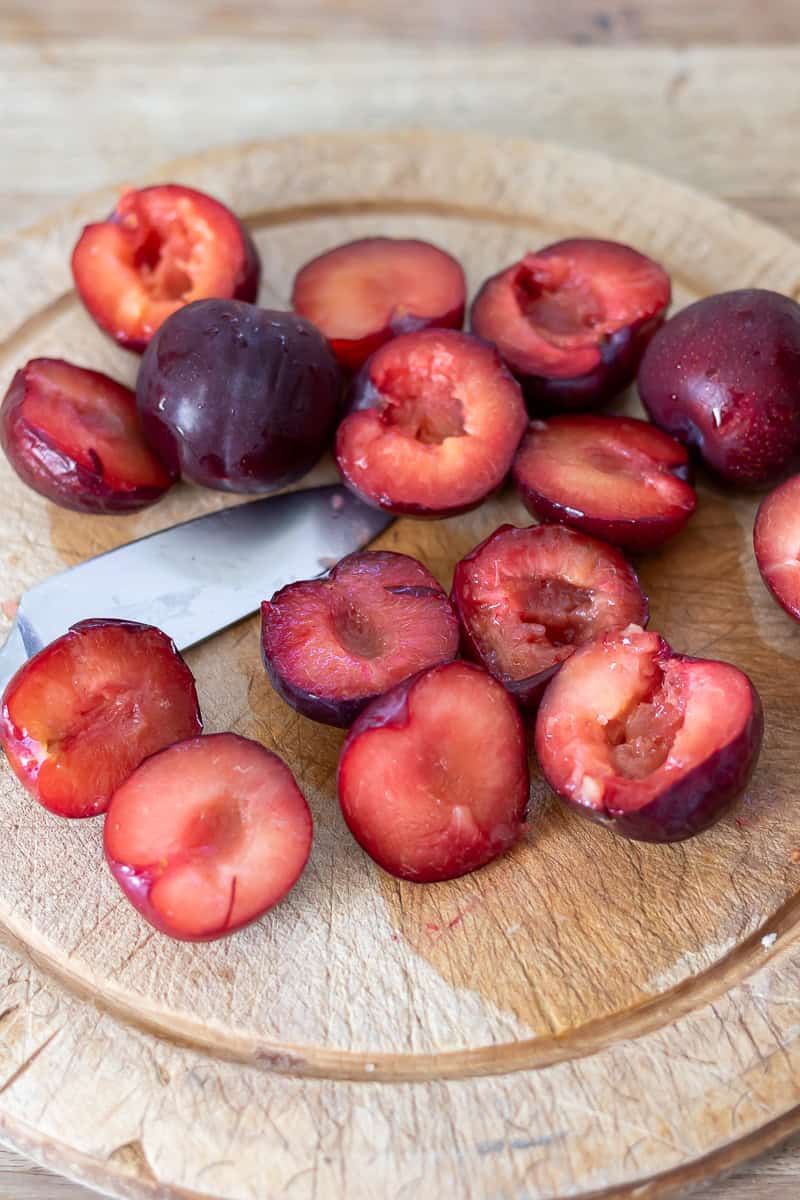
Prepare the plums. Wash and dry them, then slice each plum in half and remove the stone. If a stone refuses to come away cleanly, I loosen it with the tip of a small spoon rather than pulling hard and tearing the flesh. Arrange the halves in a baking dish in a single layer.
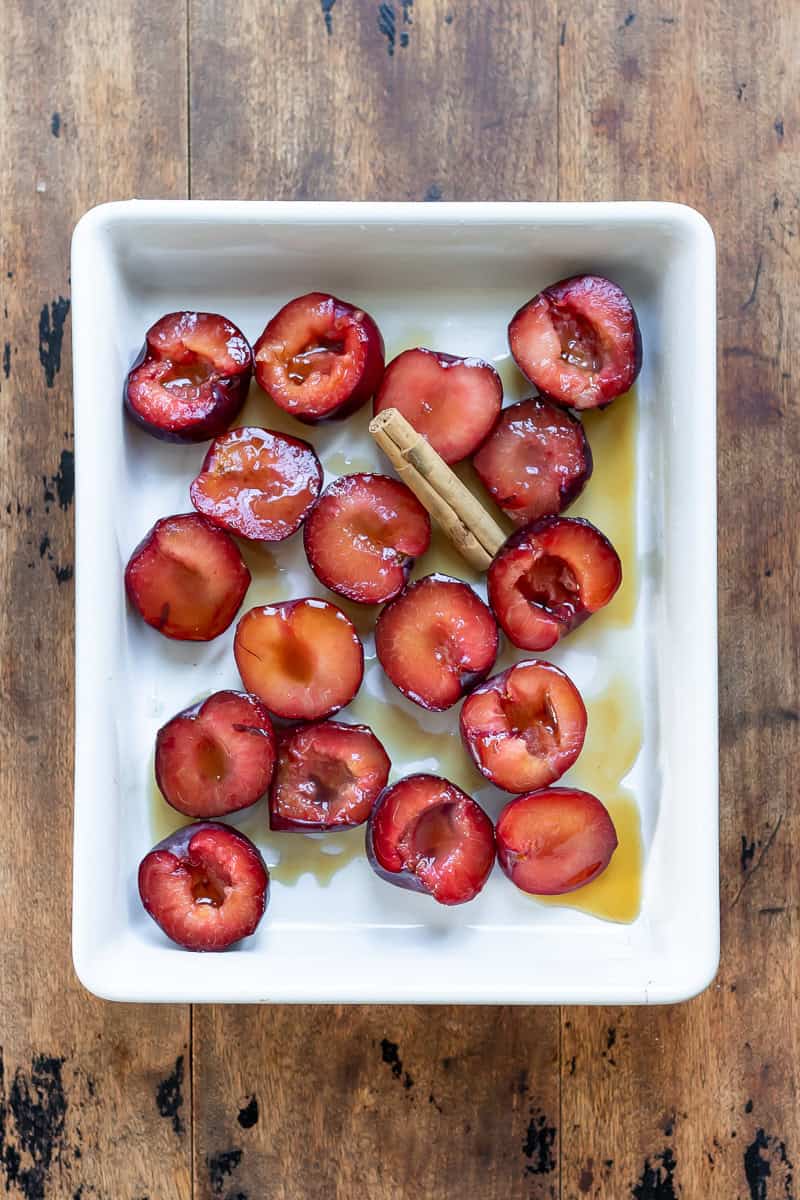
Add the flavourings. Drizzle the honey or maple syrup over the fruit, followed by the lemon juice and vanilla. Add the cinnamon stick if you're using it. There's no need to stir aggressively. I usually turn the plums gently in the liquid once so the cut surfaces get a light coating.
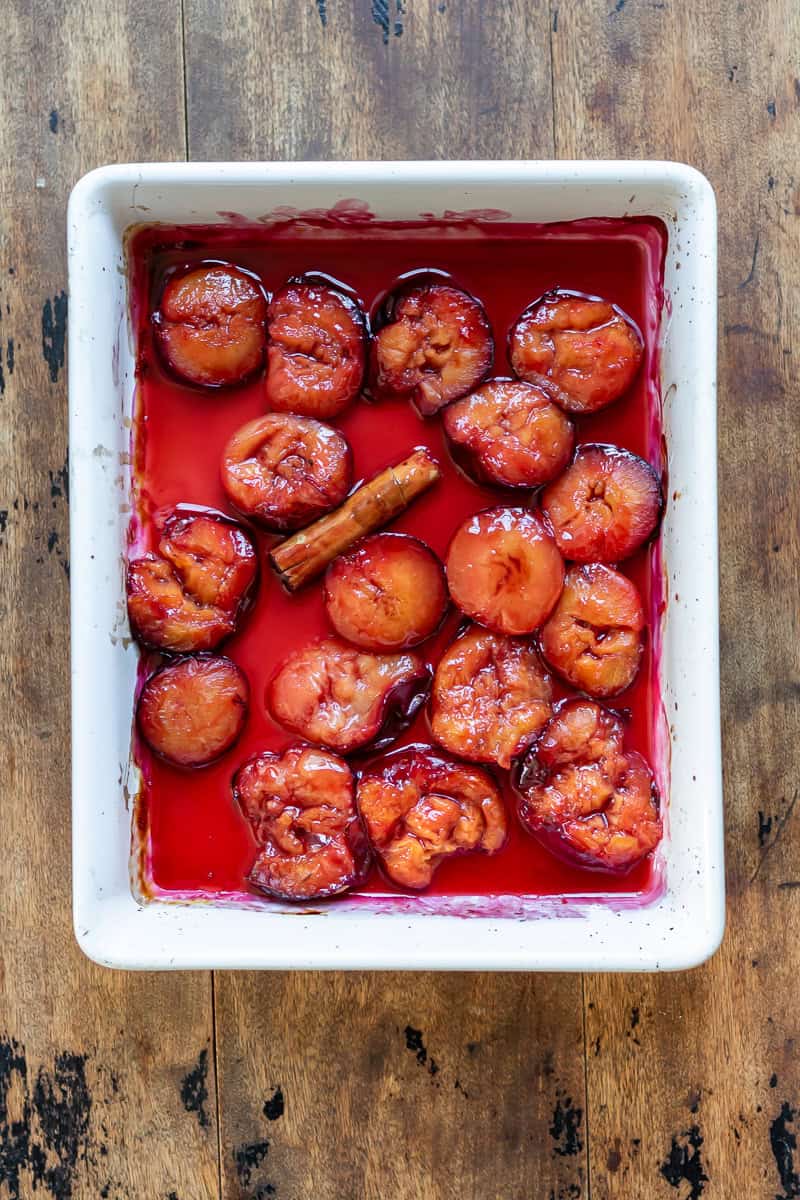
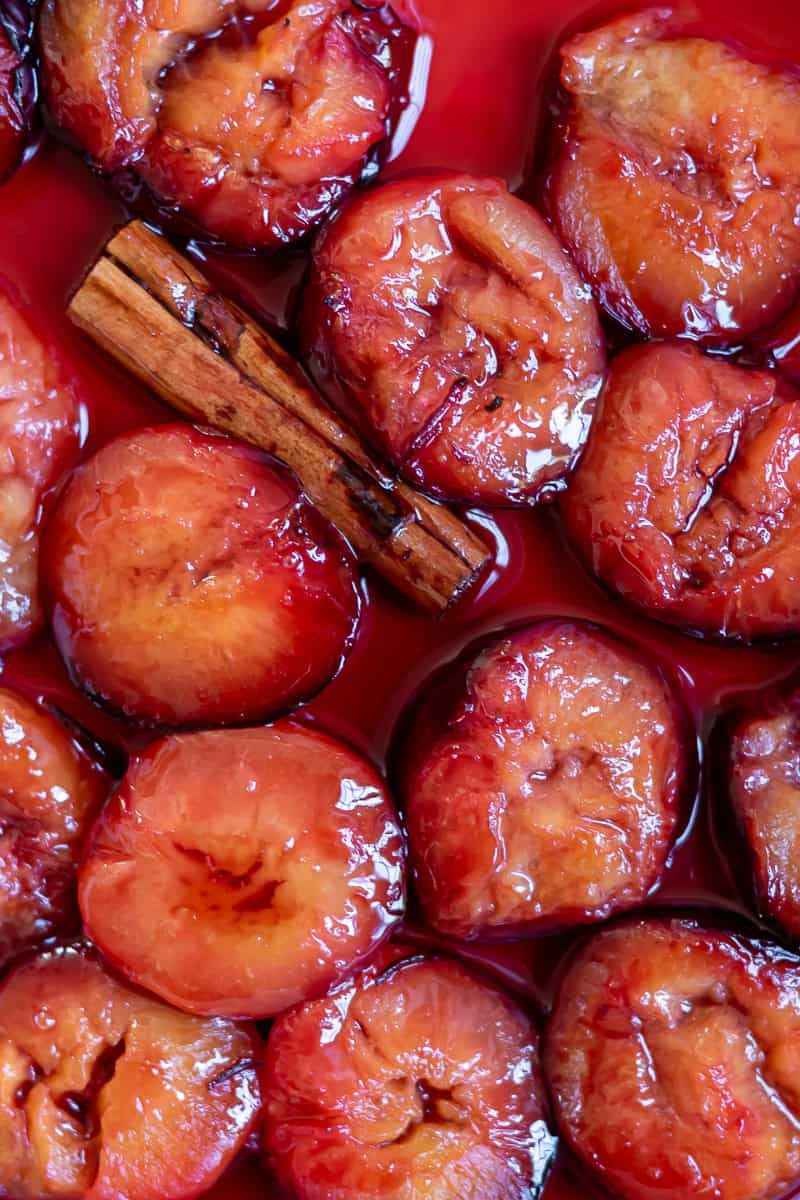
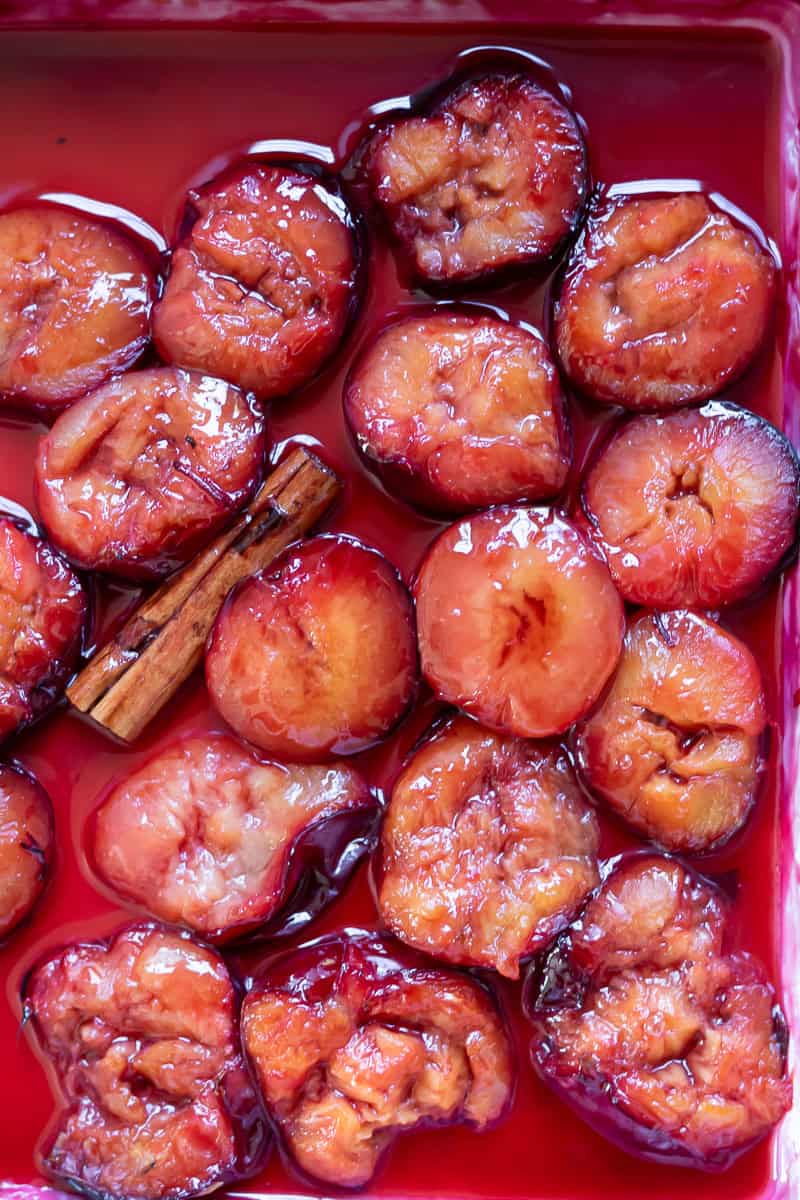
Roast for about 20 minutes. The exact time depends on ripeness and variety. After about 15 minutes, I start checking particularly soft fruit. You're looking for tender flesh, slightly wrinkled skins and plenty of coloured juice collecting in the dish.
Check the texture rather than only the clock. Insert the tip of a small knife into the thickest part of one plum. It should slip through easily but the fruit shouldn't necessarily fall apart. Firmer plums can need another 5 to 10 minutes.
Let the juices settle. Remove the dish from the oven and leave it for 5 to 10 minutes. The liquid looks fairly thin while fiercely hot but becomes more syrupy as it cools. I spoon some of the warm juice back over the plums before serving.
Serve warm or chilled. Remove the cinnamon stick. For dessert, I particularly like the contrast of warm plums and cold vanilla ice cream. For breakfast, I let them cool completely before refrigerating them with all their juices.
Follow this step-by-step photo tutorial, then scroll down to the recipe card for the full ingredients list and method.
Variations
- Vegan roasted plums: Use maple syrup rather than honey. The finished sauce has a slightly deeper caramel-like sweetness.
- Higher-protein breakfast: Spoon the chilled plums over Greek-style yoghurt, skyr or another high-protein yoghurt and add nuts or seeds. Baked plums are also great on Whipped Cottage Cheese.
- Roasted plums with berries: Add blackberries for the final 10 minutes. They soften quickly and deepen the colour of the sauce.
- Ginger roasted plums: Add a few thin slices of fresh ginger before roasting. It gives the fruit a fresher, sharper warmth than cinnamon.
- Savoury roasted plums: Omit the sweetener and skip the vanilla, then add thyme and black pepper. These are particularly good alongside grilled halloumi.
Ways to Serve Roasted Plums
- Vanilla ice cream gives you the classic contrast of warm, tart fruit against cold, creamy sweetness.
- Chocolate ice cream works surprisingly well because the acidity of plums cuts through richer chocolate flavours.
- Greek yoghurt makes the fruit suitable for breakfast or a lighter dessert, particularly with a little granola.
- Porridge benefits from both the fruit and its juices, which sweeten the oats without needing much additional sugar. Try it with Gruel!
- Overnight oats are an easy meal-prep option. Add the plums after the oats have soaked so the fruit remains distinct.
- Pancakes or waffles soak up the plum juices well and make a useful alternative to a conventional fruit compote. Try it with Lemon Pancakes.
- Rice pudding pairs naturally with the vanilla and cinnamon already present in the fruit. Vegan Rice Pudding (to keep it vegan use maple syrup in your baked plums, not honey).
- Cheesecake benefits from the tartness of the plums, especially a rich baked cheesecake. Spoon it over Vegan Cheesecake.
Storage, Freezing and Making Ahead
Once completely cool, transfer the roasted plums and all their juices to an airtight container and refrigerate them. I prefer glass containers because deeply coloured plum juice can mark some plastic containers.
They'll generally keep well in the fridge for 3 to 4 days. The texture becomes softer with time, but that's rarely a disadvantage if you're using them on porridge, yoghurt or overnight oats.
They're excellent for meal prep. I often divide yoghurt or oats separately and add the fruit when serving. Keeping them apart prevents the plum juice from turning everything watery during storage.
You can freeze roasted plums, although they won't retain the same neat shape after thawing. Freeze them with their sauce in a suitable airtight container, leaving a little room for expansion. Once thawed, I prefer them in porridge, smoothies, crumbles or sauces rather than as a carefully presented dessert.
To refresh refrigerated plums, eat them cold or warm them gently until just heated through. A splash of lemon juice can brighten leftovers that have been sitting for a couple of days.
Recipe tips
- Match the cooking time to ripeness. Very soft plums can be ready before 20 minutes, while firm ones may need longer. Checking early is much easier than rescuing fruit that has completely collapsed.
- Keep every drop of juice. The liquid in the baking dish is part of the recipe, not something to drain away. It becomes especially good after chilling overnight.
- Use a reasonably snug dish. This prevents the fruit juices spreading too thinly and evaporating before they can form a sauce.
- Taste your plums first. A particularly sharp batch may benefit from a touch more honey, whereas naturally sweet plums don't need it.
- Don't peel the fruit. The skin softens considerably during roasting, contributes colour and helps delicate plum halves retain some structure.
- Allow them to cool before judging the sauce. I've found the juices always seem thinner straight from the oven. Give them a few minutes before deciding they need further reduction.
- Keep the flavourings restrained. Plums have plenty of character. Too much cinnamon or vanilla can cover their natural sweet-sharp flavour rather than complementing it.
FAQs
No. I leave the skins on because they soften during cooking, contribute colour to the sauce and help the fruit retain its shape. Peeling also makes ripe plum halves considerably more fragile.
They should be tender and starting to collapse, and surrounded by their released juices. The skins often wrinkle slightly. Take them out earlier if you want distinct halves and leave them longer if you prefer a softer, compote-like texture.
Yes, although they'll usually be more acidic and take longer to soften. A little additional honey or maple syrup can help balance particularly tart fruit.
Yes. Very ripe sweet plums can be roasted with just lemon and vanilla if you prefer. The resulting sauce will be less syrupy and its flavour will depend more heavily on the natural sweetness of the fruit.
Both work well. I prefer them warm with ice cream and cold with yoghurt, overnight oats or granola. At room temperature they're particularly convenient for brunches and picnics.
More Flavours That Work with Roasted Plums
Once you know the basic method, plums are easy to take in different directions.
Fresh thyme gives them a subtle savoury edge and is particularly useful if you're serving the baked fruit with cheese.
Rosemary is stronger, so I use only a small sprig. It's good with darker, sharper plums.
Fresh ginger adds warmth without the sweetness associated with baking spices.
Cardamom makes the fruit more aromatic. A couple of crushed pods are usually enough.
Star anise creates a deeper liquorice-like spice note and works particularly well with very dark plums.
Orange zest gives a softer citrus flavour than lemon and suits sweeter dessert versions.
Mascarpone or ricotta turns the fruit into a more substantial dessert without requiring ice cream.
Goat's cheese works with a less-sweet batch of roasted plums for a savoury lunch or starter.
Balsamic vinegar can replace some of the lemon in a savoury version. Use a small amount because its flavour concentrates during cooking.
Tahini dressing works particularly well with chilled plums, yoghurt and toasted seeds because its nuttiness offsets the fruit's acidity.

Sign up for our free newsletter and never miss a recipe!
Plus, you'll get a free eBook: 15 Minute Vegan Dinners!
⭐⭐⭐⭐⭐ If you love this recipe, please leave a five-star rating and review in the comments below! And if you make any modifications, let us know how it went so that we can all benefit from your experience. Happy cooking!
📖 Recipe
Roasted Plums
Equipment
- Baking dish
Ingredients
- 8 ripe plums
- 2 tablespoons honey or maple syrup
- 1 tablespoon lemon juice
- 1 teaspoon vanilla extract
- 1 cinnamon stick optional
Instructions
- Preheat the oven to 200°C/400°F.
- Wash the plums, then cut them in half and remove and discard the pits.
- Add the plums to a baking dish, then drizzle them with the honey (or maple syrup), lemon juice and vanilla. Place the cinnamon stick into the dish.
- Place the baking dish into the preheated oven and roast the plums for 20 minutes or until soft, and they've released juices to form a sauce.
- Delicious served over vanilla or chocolate ice cream, oatmeal, yogurt or alone as a tasty dessert.
Notes
- Match the cooking time to ripeness. Very soft plums can be ready before 20 minutes, while firm ones may need longer. Checking early is much easier than rescuing fruit that has completely collapsed.
- Keep every drop of juice. The liquid in the baking dish is part of the recipe, not something to drain away. It becomes especially good after chilling overnight.
- Use a reasonably snug dish. This prevents the fruit juices spreading too thinly and evaporating before they can form a sauce.
- Taste your plums first. A particularly sharp batch may benefit from a touch more honey, whereas naturally sweet plums don't need it.
- Don't peel the fruit. The skin softens considerably during roasting, contributes colour and helps delicate plum halves retain some structure.
- Allow them to cool before judging the sauce. I've found the juices always seem thinner straight from the oven. Give them a few minutes before deciding they need further reduction.
- Keep the flavourings restrained. Plums have plenty of character. Too much cinnamon or vanilla can cover their natural sweet-sharp flavour rather than complementing it.
Nutrition
The nutritional information provided is approximate and can vary depending on several factors, so is not guaranteed to be accurate. Please see a registered dietician for special diet advice.
Comments
No Comments