
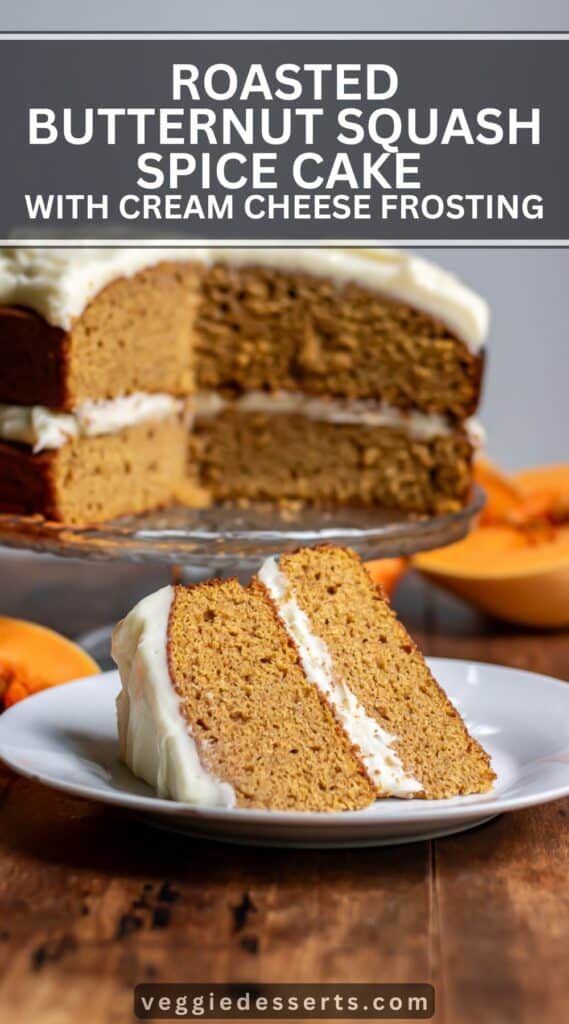
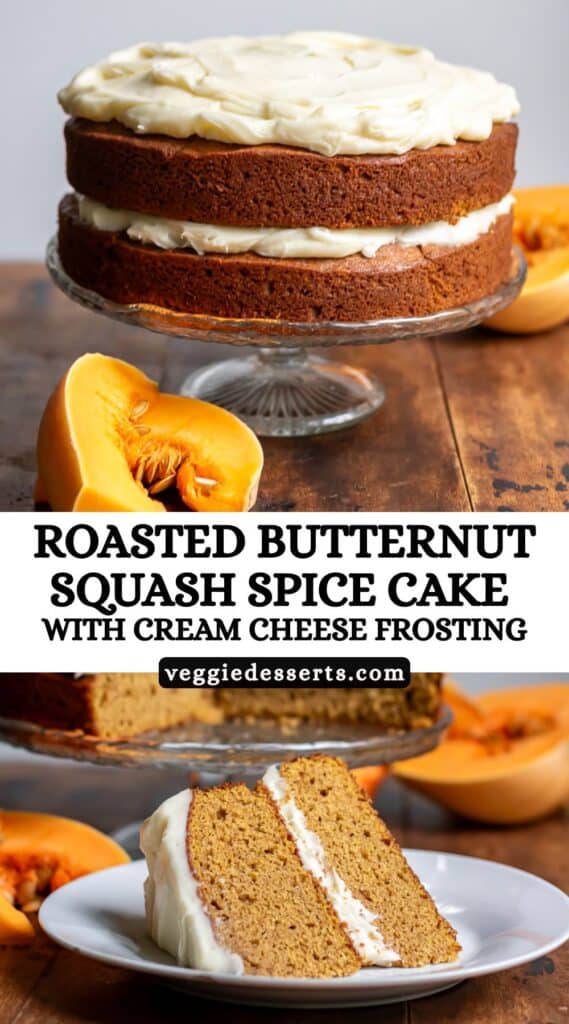
Make a moist Roasted Butternut Squash Cake with warm spices and rich maple cream cheese frosting. A tasty autumnal layer cake!
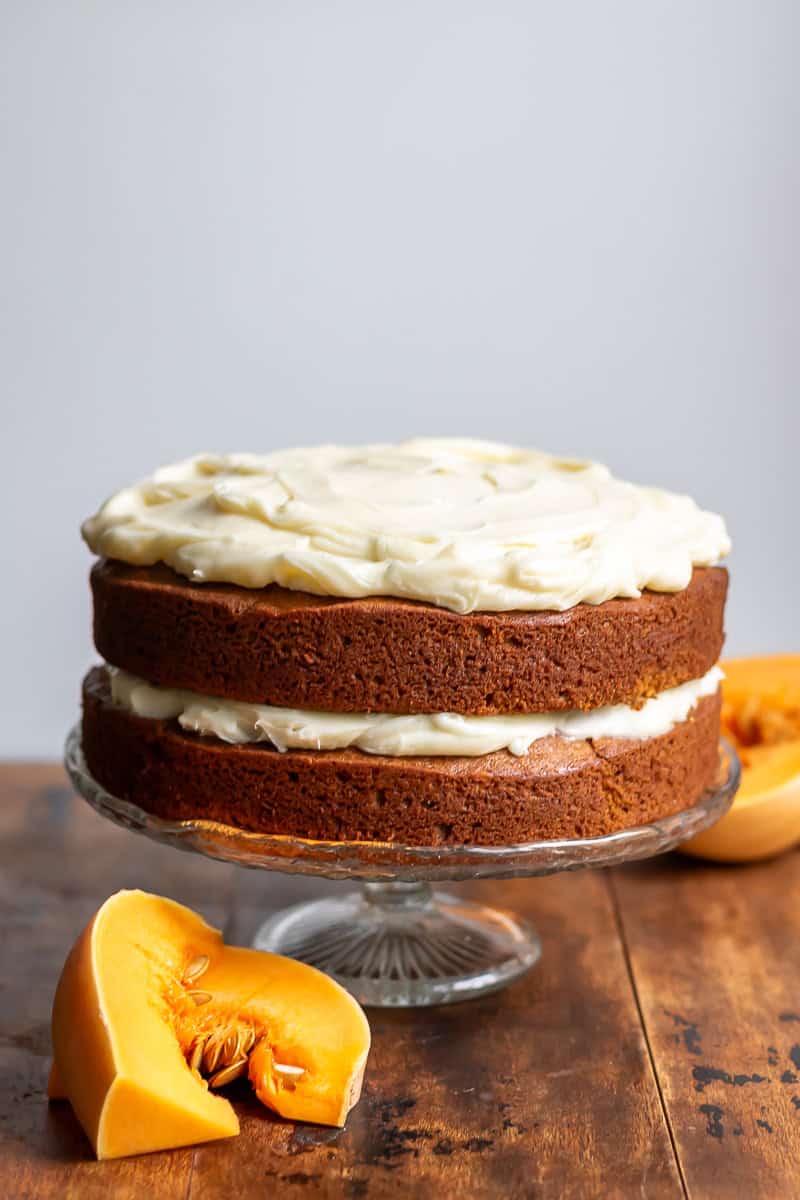
Roasting butternut squash gives this two-layer spiced cake natural sweetness, moisture and a beautifully tender texture.
The maple cream cheese frosting balances the warm spices, making it a lovely autumn cake that can also be prepared ahead.
Butternut squash might not be the first ingredient that comes to mind when baking a layer cake, but it works surprisingly well.
Its naturally sweet flesh blends into a smooth purée, adding moisture and a subtle earthy sweetness that sits beautifully alongside warming spices.
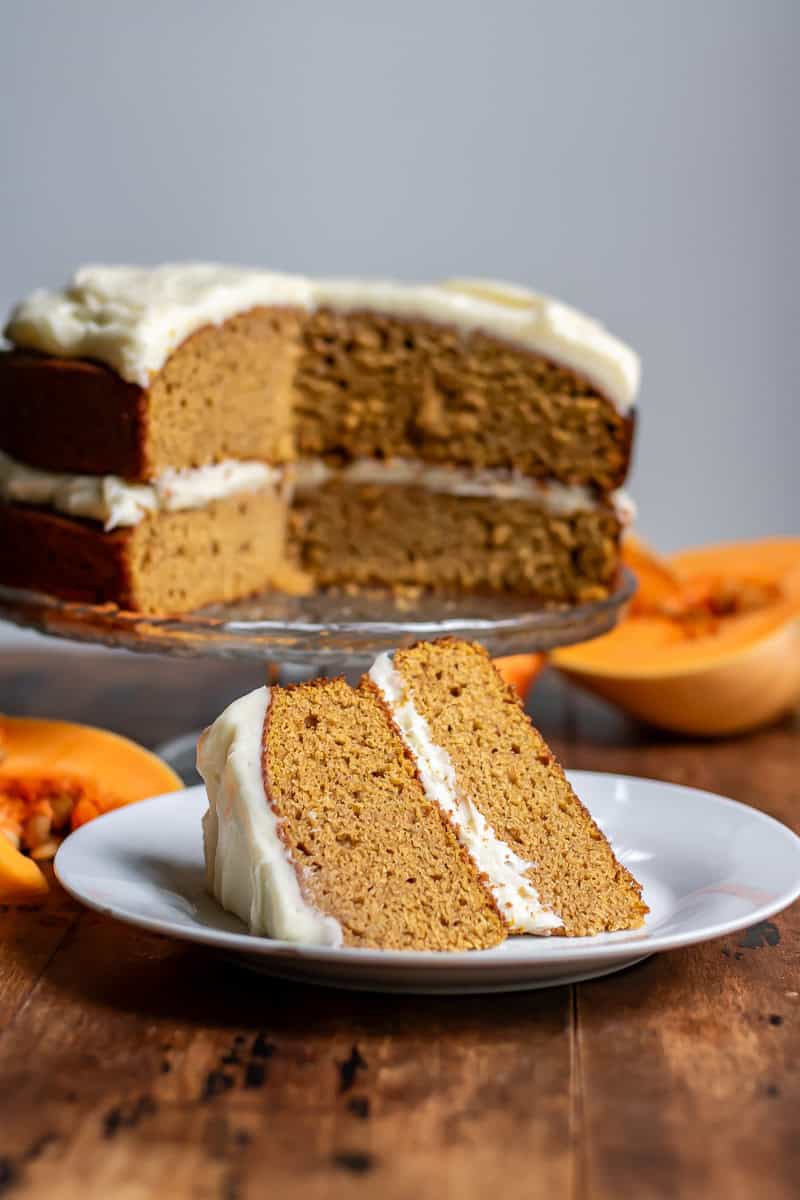
Unlike grated carrot, which remains slightly visible in a finished cake, puréed squash becomes part of the sponge itself. The result is a soft, close crumb that's tender without being stodgy. You won't find noticeable pieces of squash, and the flavour is delicate rather than vegetable-heavy.
The frosting is delicious but simple. Full-fat cream cheese adds tang, maple syrup brings a gentle sweetness, and butter helps everything hold together.
I think this cake is particularly good from September through winter, although there's no reason not to bake it throughout the year!
If you're looking for more butternut squash desserts, be sure to try Butternut Squash Muffins, Chocolate Chunk Butternut Squash Cake, and Squash and Apple Strudel with Dried Cranberries.
This recipe was originally Published: May 1, 2013, and updated Nov 13, 2026 with new photos, text and updated retested recipe.
Jump to:
Why You'll Love This Recipe
- Naturally moist sponge. Roasted squash helps the cake retain moisture without relying on large amounts of oil.
- Balanced sweetness. The tangy cream cheese frosting offsets the brown sugar and maple syrup.
- Gentle warming spices. Cinnamon, ginger and cloves give the cake character without overwhelming the squash.
- Good for making ahead. The cake layers can be baked in advance, leaving just the frosting and assembly.
- No complicated decoration. Soft swirls of frosting look attractive without piping equipment. You could also sprinkle it with a little cinnamon and top with toasted pecans!
- A useful seasonal bake. It's a lovely way to use autumn squash beyond soups and savoury dishes.
Why Roast the Butternut Squash?
The roasted squash is what makes this cake different from a standard spiced sponge.
I look for a firm butternut squash that feels heavy for its size, with unbroken skin and no soft patches. The flesh should be deep orange and fairly dense.
Cutting it into evenly sized cubes helps everything roast at the same rate. You're looking for squash that's completely tender when pierced with a fork, not necessarily deeply browned.
After roasting, the squash should blend into a thick purée. Add only enough milk to help the blender work. Too much liquid can make the cake heavy or slightly gummy.
Pumpkin or another sweet winter squash can be substituted, provided the cooked purée is similarly thick.
I wouldn't recommend using raw squash in this particular recipe. Roasting softens the fibres, reduces excess moisture and produces a more concentrated flavour.
Ingredients
For the Butternut Squash Cake
- Butternut Squash - The main ingredient, providing moisture, natural sweetness and a tender crumb. Choose firm squash and remove the skin and seeds before roasting.
- Plain Flour - Gives the cake structure. All-purpose flour is the American equivalent. Measure carefully, as too much flour can make the sponge dense.
- Light Brown Soft Sugar - Adds moisture and a mild caramel flavour. Light brown sugar works equally well in the US.
- Unsalted Butter - Creates a rich, buttery sponge. Let it soften naturally so it creams properly with the sugar.
- Caster Sugar - Helps produce a lighter texture. Superfine sugar is the closest American equivalent.
- Large Eggs - Bind the ingredients and help the cake rise. Room-temperature eggs incorporate more easily.
- Whole Milk - Helps turn the roasted squash into a smooth purée. Add it gradually rather than automatically using all of it.
- Ground Cinnamon - Provides the main warming spice flavour. Freshly opened ground cinnamon has a noticeably better aroma.
- Ground Ginger - Adds gentle warmth and balances the sweetness.
- Baking Powder - Helps the cake rise and keeps the crumb from becoming too compact.
- Vanilla Extract - Rounds out the sweetness and spices. Pure vanilla extract gives the cleanest flavour.
- Bicarbonate of Soda - Also called baking soda in the US. Works alongside the baking powder to support the rise.
- Salt - Balances the sweetness and brings out the other flavours.
- Ground Cloves - Adds a deeper spiced note. Use sparingly because cloves can quickly dominate.
- Oil - Helps the squash roast without drying out. A neutral oil such as sunflower or vegetable oil works well.
For the Maple Cream Cheese Frosting
- Full-Fat Cream Cheese - Gives the frosting its creamy texture and slight tang. Choose a thick, full-fat variety rather than a reduced-fat spread.
- Icing Sugar - Sweetens and helps stabilise the frosting. Called powdered sugar or confectioners' sugar in the US.
- Unsalted Butter - Gives the frosting body. It should be softened, but not melted.
- Pure Maple Syrup - Adds a gentle maple flavour. Avoid maple-flavoured pancake syrup, which behaves differently.
- Vanilla Extract - Complements the maple syrup and softens the tang of the cream cheese.
How to Make Roasted Butternut Squash Cake
Preparation: 25 minutes | Roasting: 20–25 minutes | Baking: 25–30 minutes | Additional cooling required.
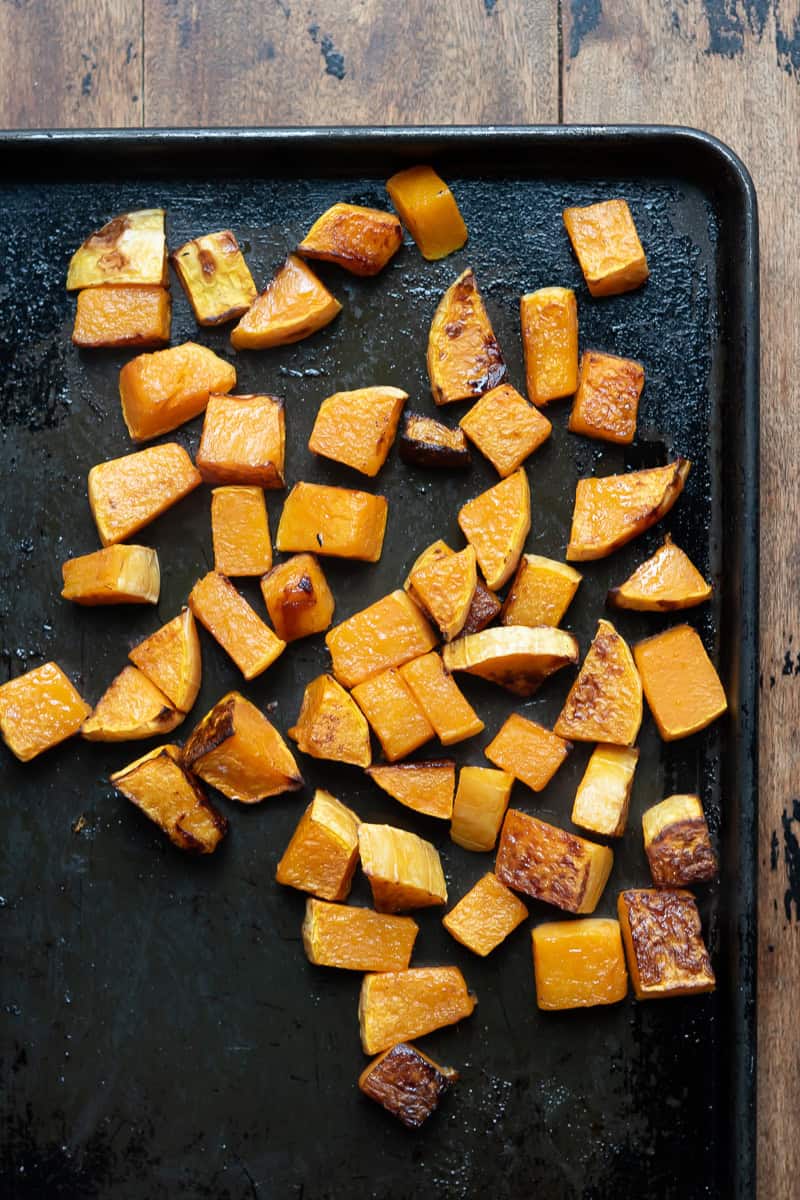
1. Roast the squash. Preheat the oven to 200°C/400°F (180°C fan). Spread the cubed squash on a baking tray, toss with the oil and roast for 20–25 minutes. It should be completely tender when pierced with a fork. If some pieces are still firm, give them a little longer.
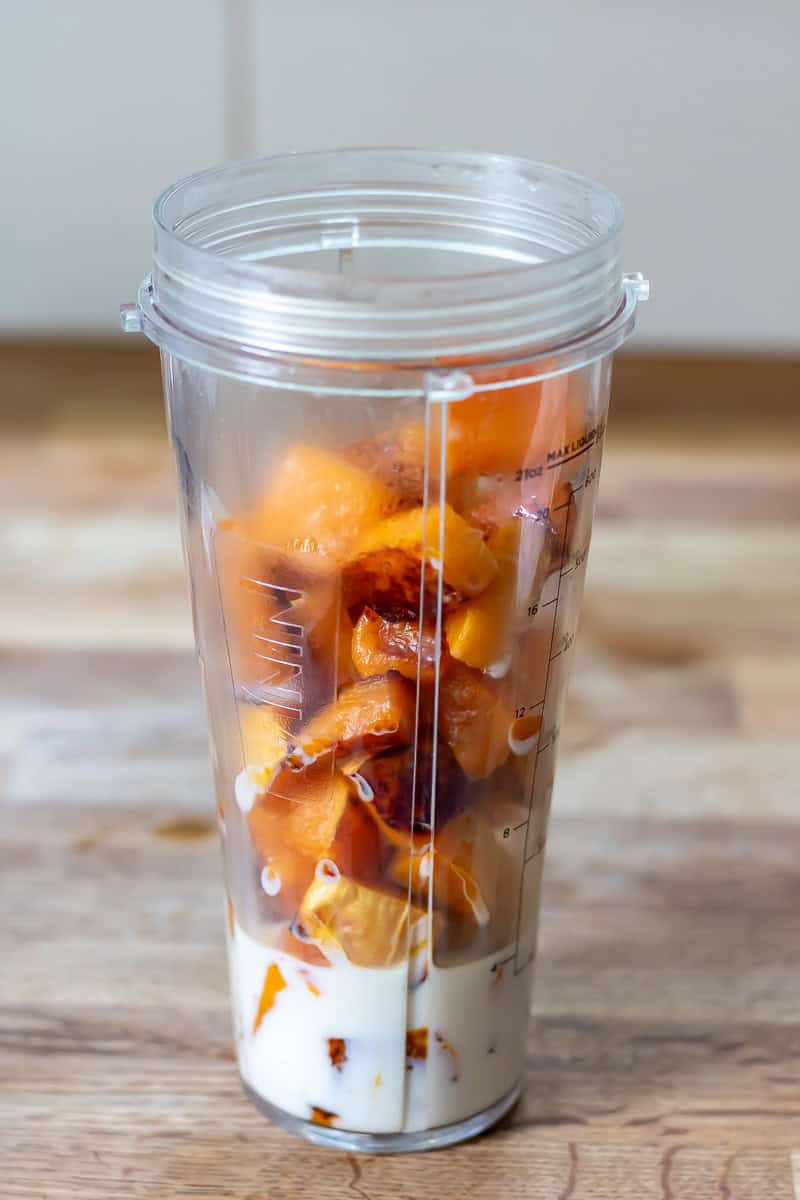
2. Make the purée. Allow the squash to cool slightly, then blend with enough milk to make a thick, smooth purée. Start with less milk and add more only if necessary. Leave to cool before adding to the cake mixture.
3. Prepare the cake tins. Reduce the oven to 180°C/350°F (160°C fan). Grease and line two 20cm (8-inch) round cake tins. Lining the bases makes removing these soft sponges much easier.
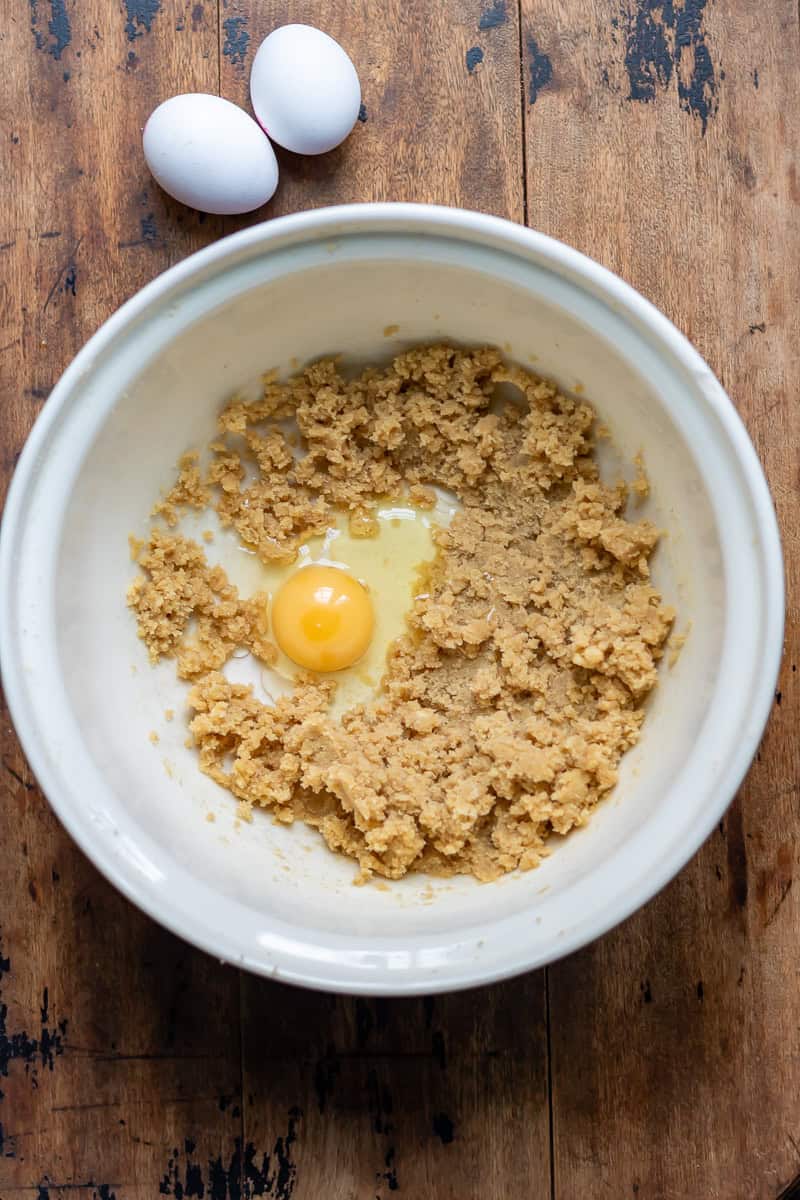
4. Cream the butter and sugars. Beat the softened butter, light brown sugar and caster sugar together for 3–4 minutes. The mixture should look lighter and fluffy, although the brown sugar means it won't become completely pale.
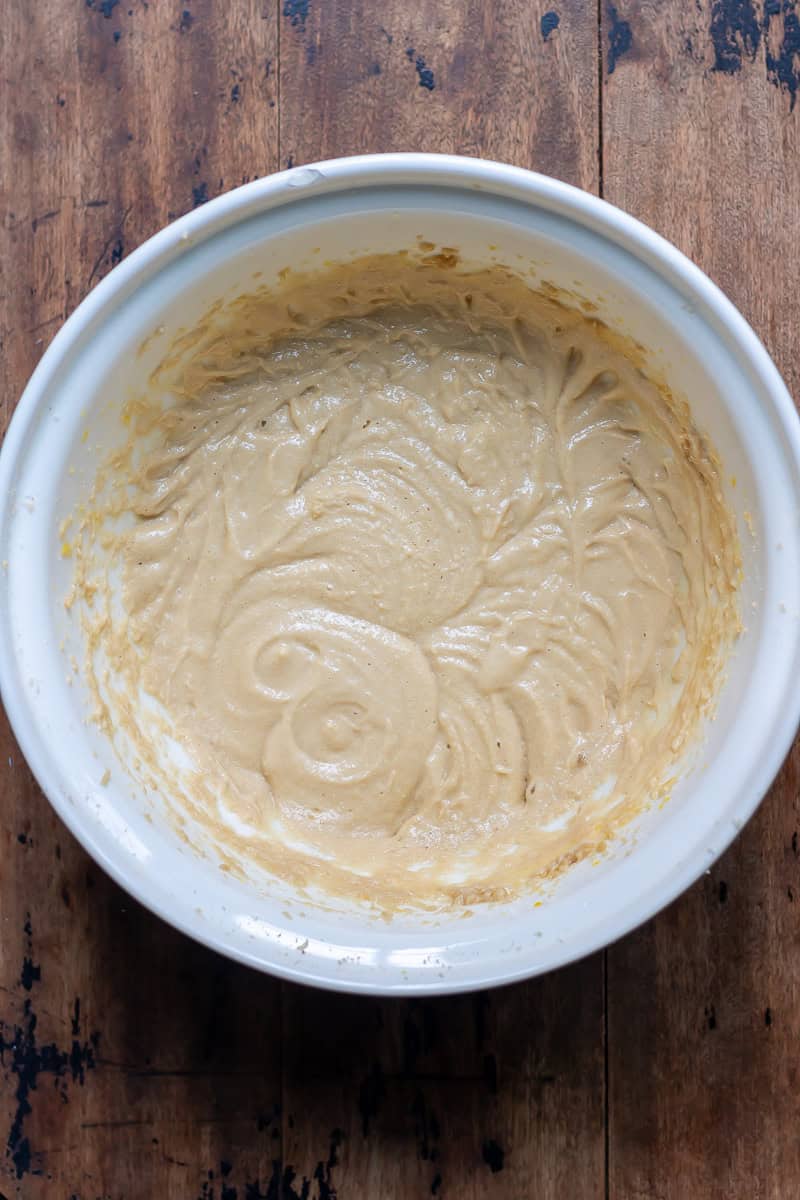
5. Add the eggs and squash. Beat in the eggs one at a time, followed by the vanilla.
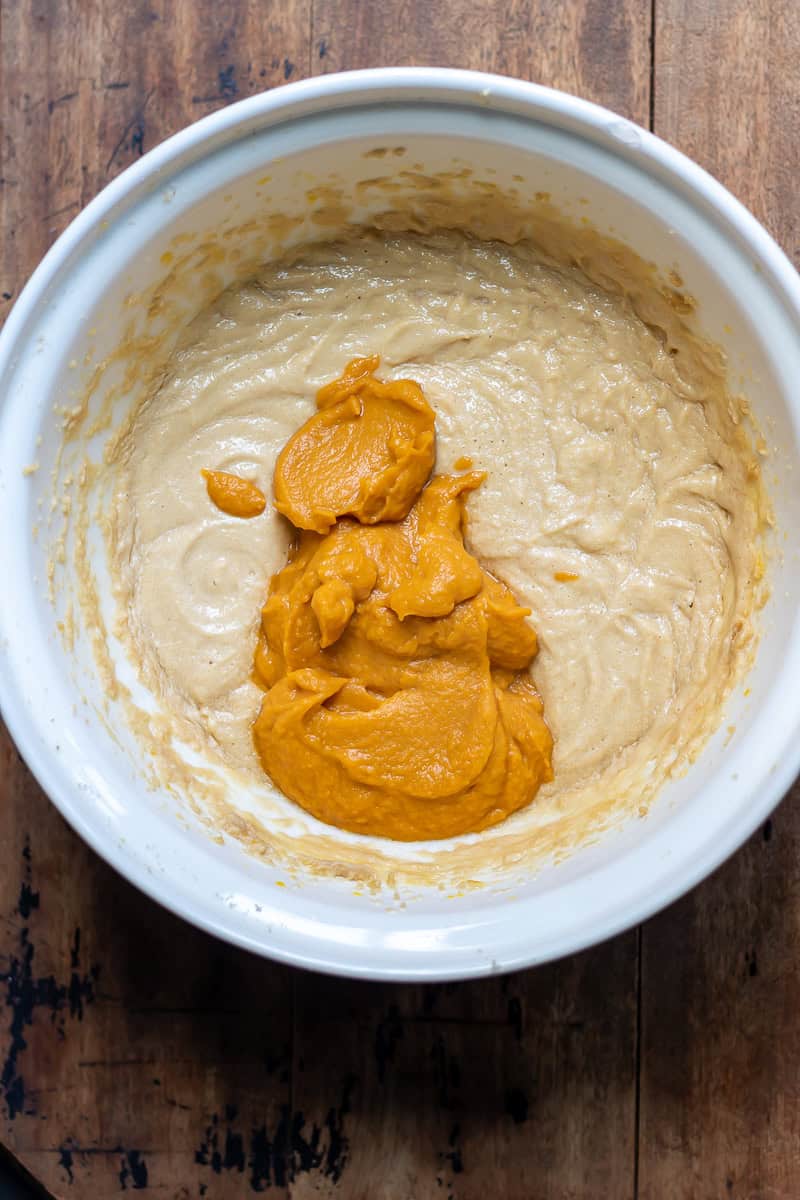
Mix in the cooled squash purée. Don't worry if the mixture looks slightly split. It usually comes together once the flour is added.
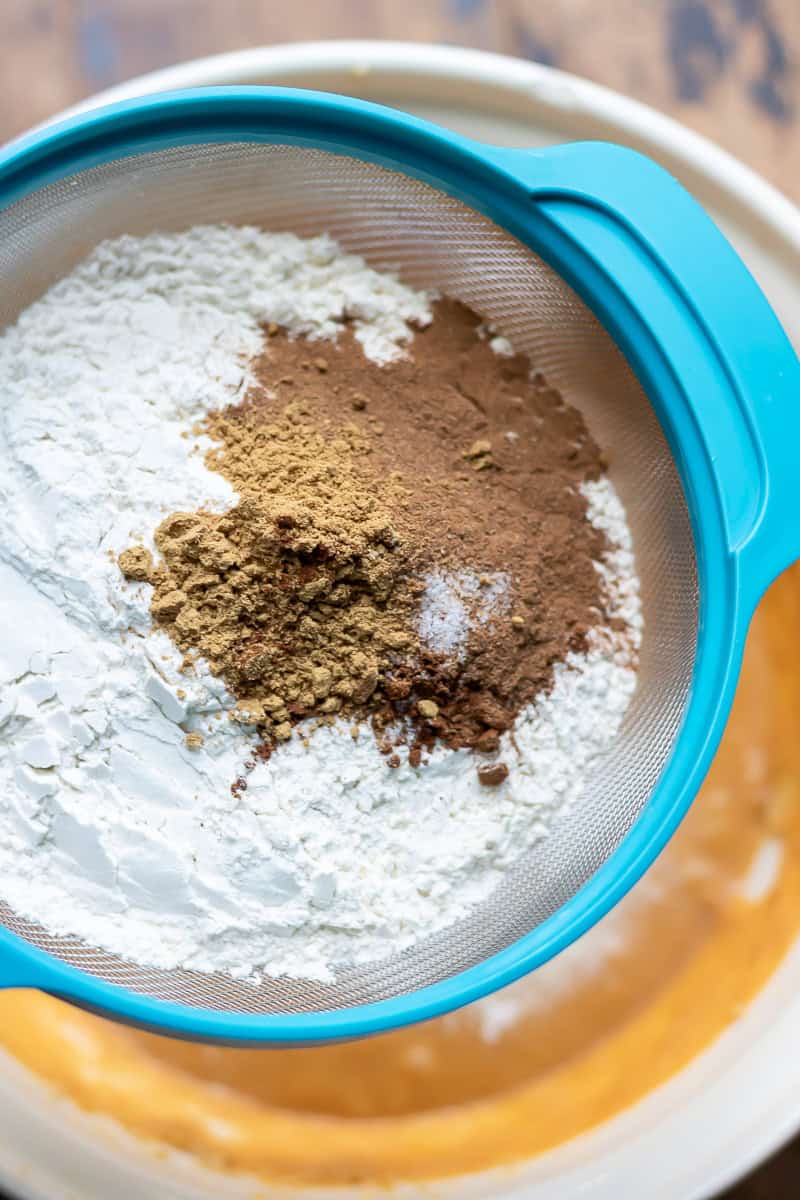
6. Fold in the dry ingredients. Sift in the flour, cinnamon, ginger, cloves, salt, baking powder and bicarbonate of soda. Fold gently until no dry flour remains.
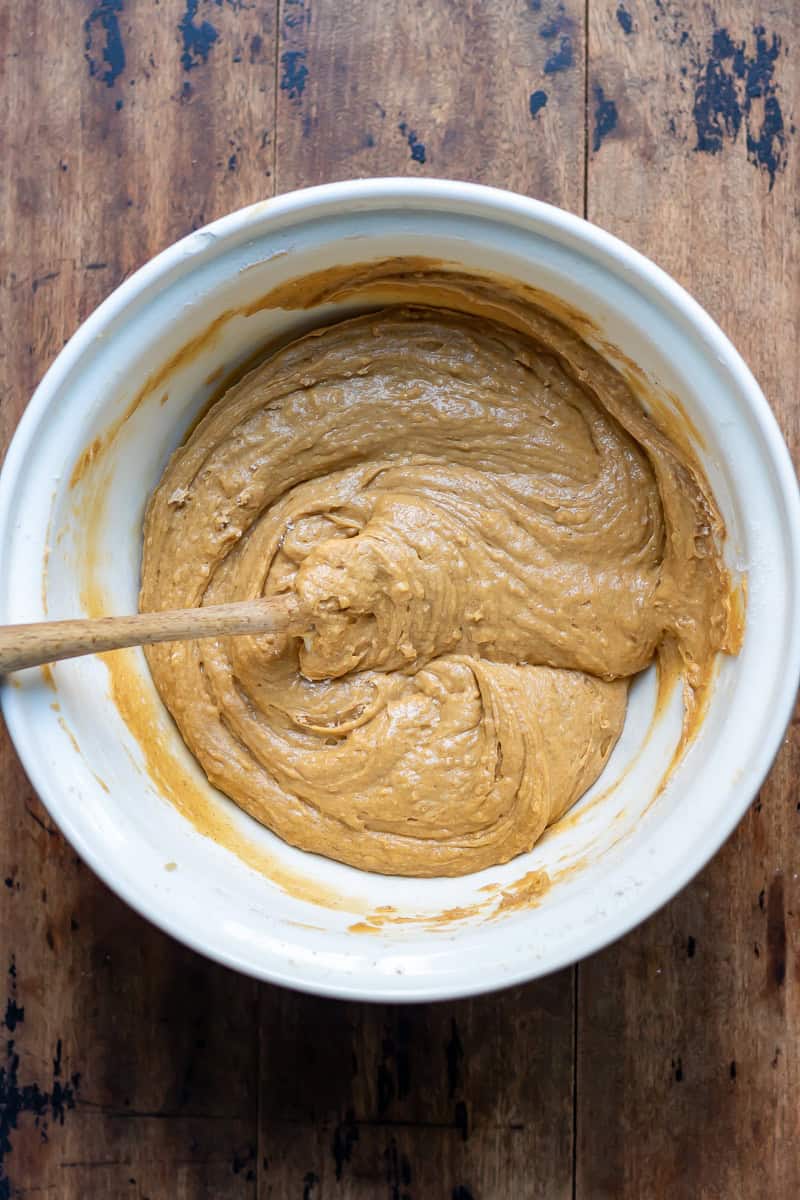
The batter should be thick but spoonable. Avoid vigorous mixing, which can make the cake tough.
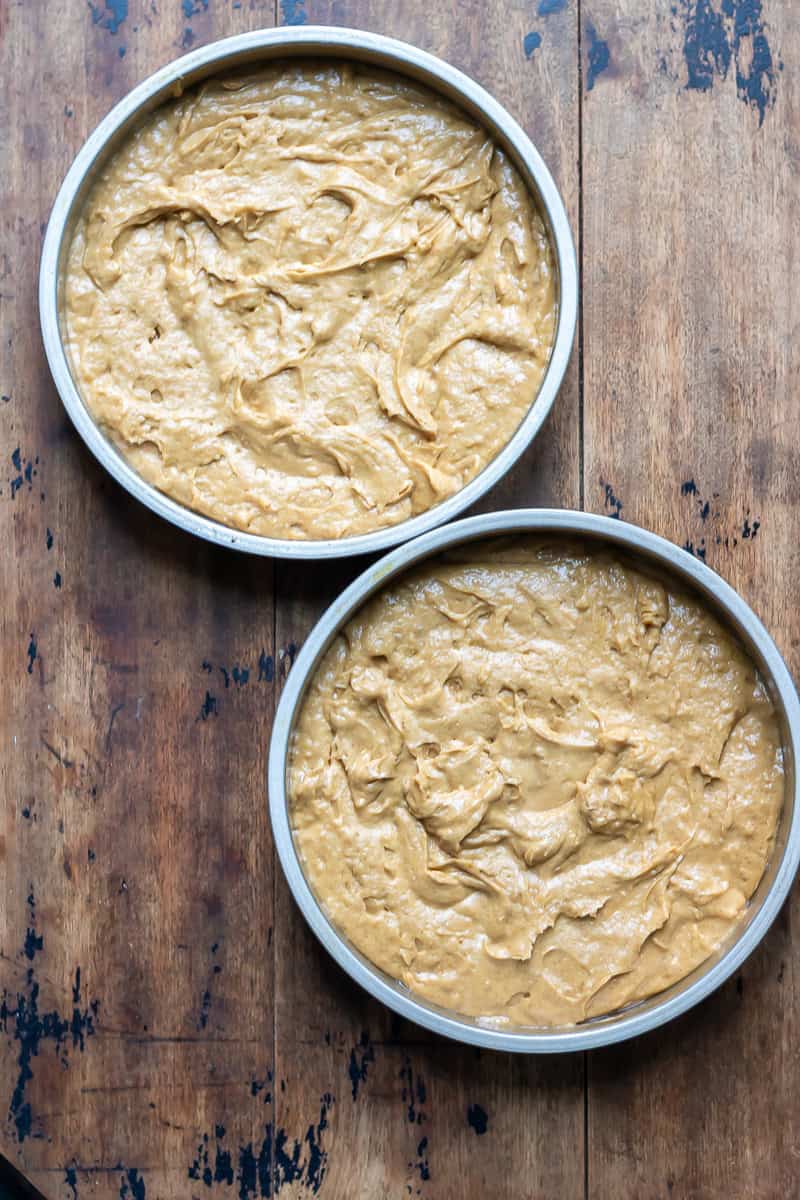
7. Fill the pans. Divide the batter evenly between the prepared tins and smooth the surfaces. I like to weigh the filled tins when possible because evenly sized layers bake more consistently.
8. Bake the cakes. Bake for 25–30 minutes, checking towards the end. The tops should spring back lightly when pressed, and a skewer inserted into the centre should come out clean or with a few moist crumbs.
9. Cool completely. Leave the cakes in their tins for 15 minutes, then transfer to a wire rack to cool completely.
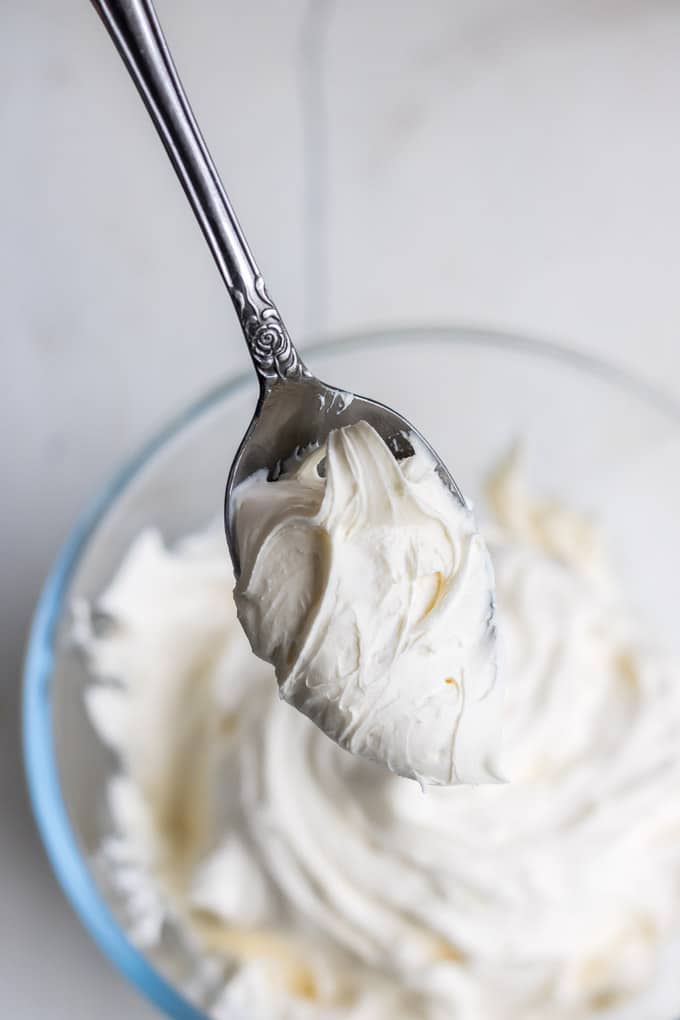
10. Prepare the frosting. Beat the softened butter and sifted icing sugar until pale and fluffy. Mix in the maple syrup and vanilla, then add the cold cream cheese. Beat briefly on a low speed until smooth.
11. Adjust the frosting consistency. If it feels too soft to spread neatly, refrigerate for 15–20 minutes. Avoid adding lots of extra icing sugar, as this can make the frosting unnecessarily sweet.
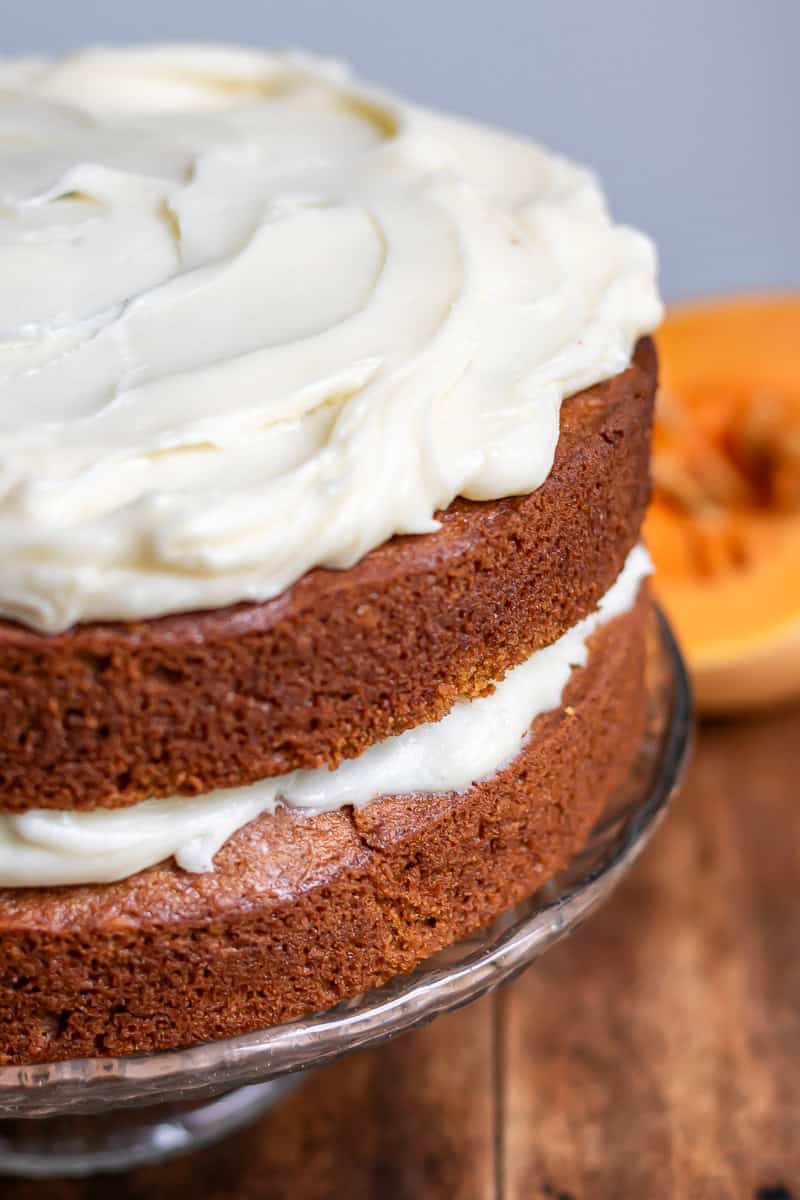
12. Assemble the cake. Place one cooled layer on a serving plate and spread with approximately half the frosting. Add the second layer and spread the remaining frosting over the top. Finish with gentle swirls using a palette knife or the back of a spoon.
Recipe Tips
- Don't overcrowd the roasting tray. Squash releases steam as it cooks. Spreading it out helps excess moisture evaporate.
- Keep the purée thick. Watery squash purée can make the cake dense and slow to bake through.
- Use properly softened butter. Butter that's too cold won't cream well, while melted butter won't hold the same air.
- Stop mixing once the flour disappears. Overmixing develops gluten and makes the sponge less tender.
- Keep the cream cheese cold. Cold, full-fat cream cheese helps the frosting maintain its structure.
- Cool the layers thoroughly. Even slightly warm sponge can cause the frosting to slide or become runny.
Variations
- Pumpkin cake. Replace the squash with an equal weight of thick roasted pumpkin purée for a slightly different earthy sweetness.
- Sweet potato cake. Roasted sweet potato purée produces a naturally sweeter, slightly denser sponge.
- Pecan cake. Add chopped toasted pecans to complement the maple frosting.
- Orange-spiced cake. Add finely grated orange zest for a fresher, brighter flavour.
- Cardamom cake. Replace some of the cloves with ground cardamom for a more fragrant spice profile.
The original recipe is vegetarian, provided the dairy products are suitable for your dietary requirements.
Storage, Freezing and Making Ahead
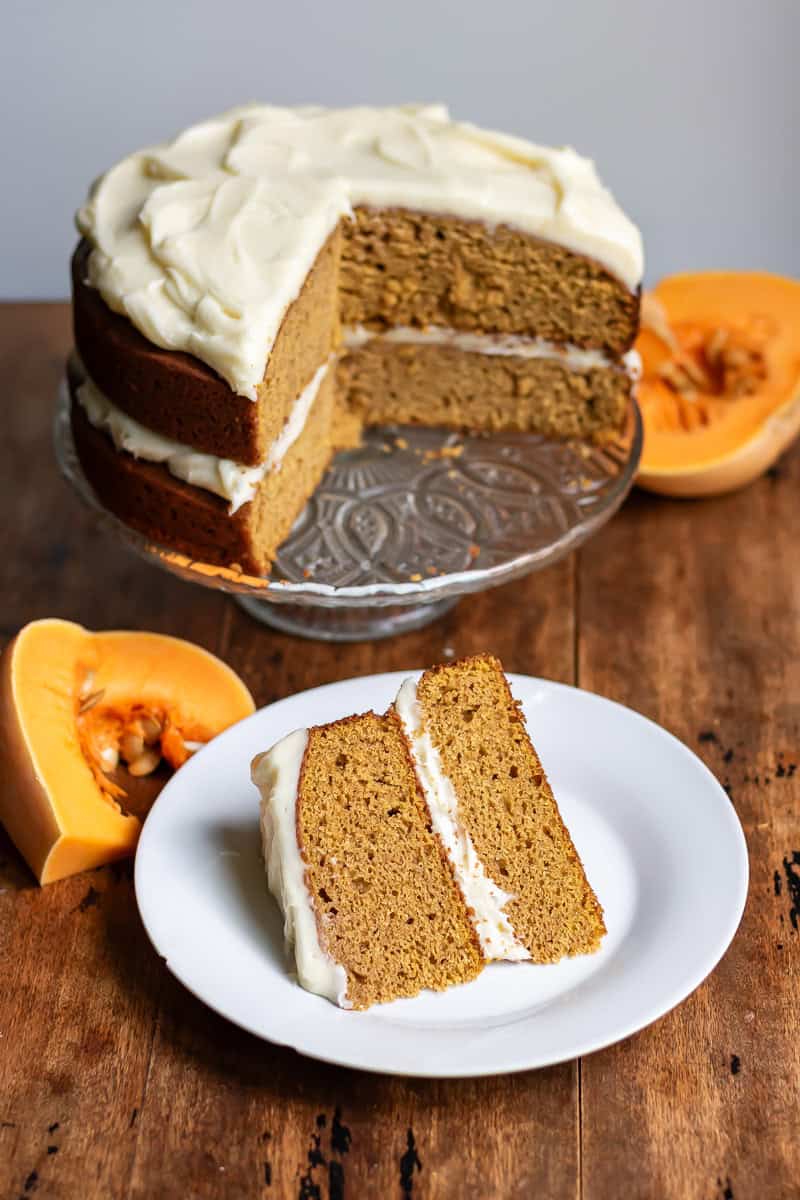
Because the frosting contains cream cheese, keep the finished cake covered in the fridge for up to 3–4 days.
An airtight cake container is ideal, as it prevents the sponge from drying out or absorbing other fridge odours.
The cake will firm up when chilled because of the butter in the sponge and frosting. I prefer to remove it from the fridge 20–30 minutes before serving so the texture softens slightly.
For freezing, wrap unfrosted cake layers individually in cling film and place in freezer-safe bags or containers. Freeze for up to three months for best quality. Defrost overnight in the fridge before frosting.
You can also prepare the squash purée a day ahead and refrigerate it in a covered container.
More Vegetable Cakes


More Butternut Squash Recipes


Did you make this roasted squash cake recipe? Please let me know how it turned out for you!
Leave a comment and star rating below and share a picture with the hashtag #veggiedesserts. I love seeing your recreations of my vegetarian and vegan recipes.
Follow me on Instagram * Twitter * Facebook * Pinterest * Youtube
📖 Recipe
Spiced Butternut Squash Cake with Maple Cream Cheese Frosting
Equipment
- 2 8-inch (20cm) round cake pan
- Mixing bowls
- Blender
Ingredients
- 600 g butternut squash peeled, deseeded and cubed, 1 ⅓ lb
- 1 teaspoon oil
- 5 tablespoons whole milk
- 170 g unsalted butter softened, ¾ cup
- 185 g light brown sugar ¾ cup
- 115 g caster sugar ½ cup
- 3 large eggs
- 1 teaspoon vanilla extract
- 340 g plain flour all-purpose flour, 2 ¾ cups
- 2 teaspoons ground cinnamon
- 1½ teaspoons ground ginger
- ¼ teaspoon ground cloves
- ½ teaspoon salt
- 1½ teaspoons baking powder
- ½ teaspoon bicarbonate of soda baking soda
For the maple cream cheese frosting
- 90 g unsalted butter softened, 6 ½ tablespoons
- 120 g icing sugar sifted, 1 cup
- 1½ tablespoons maple syrup
- 1 teaspoon vanilla extract
- 300 g cream cheese cold, 10 ½ ounces
Instructions
- Preheat the oven to 200°C/400°F.
- Peel, deseed and cube the butternut squash.
- Spread the cubed butternut squash over a baking tray, drizzle with the oil, toss to coat and roast for 20-25 minutes, until completely tender.
- Allow the squash to cool slightly, then blend with the milk to make a thick, smooth purée. Set aside.
- Reduce the oven temperature to 180°C/350°F. Grease and line two 20cm (8-inch) round cake tins.
- In a large mixing bowl, beat the softened butter, light brown sugar and caster sugar together for 3–4 minutes, until lighter and fluffy.
- Add the eggs one at a time, beating well after each addition, then beat in the vanilla. Mix in the cooled butternut squash purée until combined. The mixture may look slightly curdled at this stage but it will come together with the dry ingredients.
- Sift in the flour, cinnamon, ginger, cloves, salt, baking powder and bicarbonate of soda.
- Gently fold the dry ingredients into the squash mixture until just combined, taking care not to overmix. The batter should be thick but spoonable.
- Divide the batter evenly between the prepared cake pans and smooth to the edges evenly.
- Bake for 25-30 minutes, or until the cakes spring back lightly when pressed and a skewer inserted into the centre comes out clean or with a few moist crumbs.
- Allow the cakes to cool in their pans for 15 minutes before transferring to a wire rack to cool completely.
Maple Cream Cheese Frosting
- Beat the softened butter and sifted icing sugar together until pale, smooth and fluffy.
- Add the maple syrup and vanilla extract, mixing until combined.
- Add the cold cream cheese and beat briefly on a low speed until smooth and creamy. Avoid overmixing, as this can make the frosting runny.
- If the frosting is too soft, refrigerate for 15–20 minutes before using.
Assembly
- Place one completely cooled cake layer onto a serving plate or cake stand.
- Spread approximately half of the cream cheese frosting evenly over the cake.
- Carefully place the second cake layer on top and spread the remaining frosting over the surface, creating soft swirls with a palette knife or the back of a spoon.
- Store the frosted cake covered in the refrigerator for up to 3–4 days. Allow to stand at room temperature for approximately 20–30 minutes before serving for the best flavour and texture.
Notes
-
Don't overcrowd the roasting tray. Squash releases steam as it cooks. Spreading it out helps excess moisture evaporate.
-
Keep the purée thick. Watery squash purée can make the cake dense and slow to bake through.
-
Use properly softened butter. Butter that's too cold won't cream well, while melted butter won't hold the same air.
-
Measure the flour carefully. Scooping directly from a bag can compact the flour and add more than intended.
-
Stop mixing once the flour disappears. Overmixing develops gluten and makes the sponge less tender.
-
Keep the cream cheese cold. Cold, full-fat cream cheese helps the frosting maintain its structure.
-
Cool the layers thoroughly. Even slightly warm sponge can cause the frosting to slide or become runny.
Nutrition
The nutritional information provided is approximate and can vary depending on several factors, so is not guaranteed to be accurate. Please see a registered dietician for special diet advice.
Morten Pedersen says
Very nice! Spices give it a Christmas-y flavour.
Suzanne Lafon says
Hi, yesterday I made the cake, it taste very good. My husband likes it!
Sally says
Reduced the sugar a bit. Nice texture. Tasted great.
Gina says
Do you think this would work with other winter squash, like acorn? Thanks 🙂
Kate Hackworthy says
It absolutely should!
Sarah Q says
Really moist and tasted great. I used leftover roasted squash from making soup. Thanks for the recipe.