
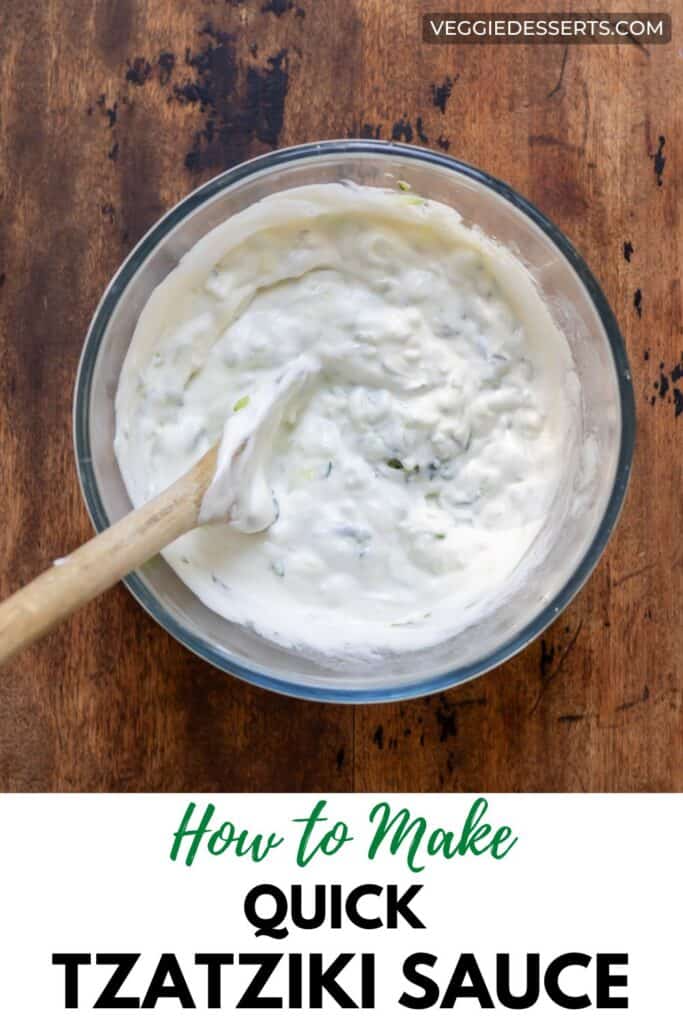
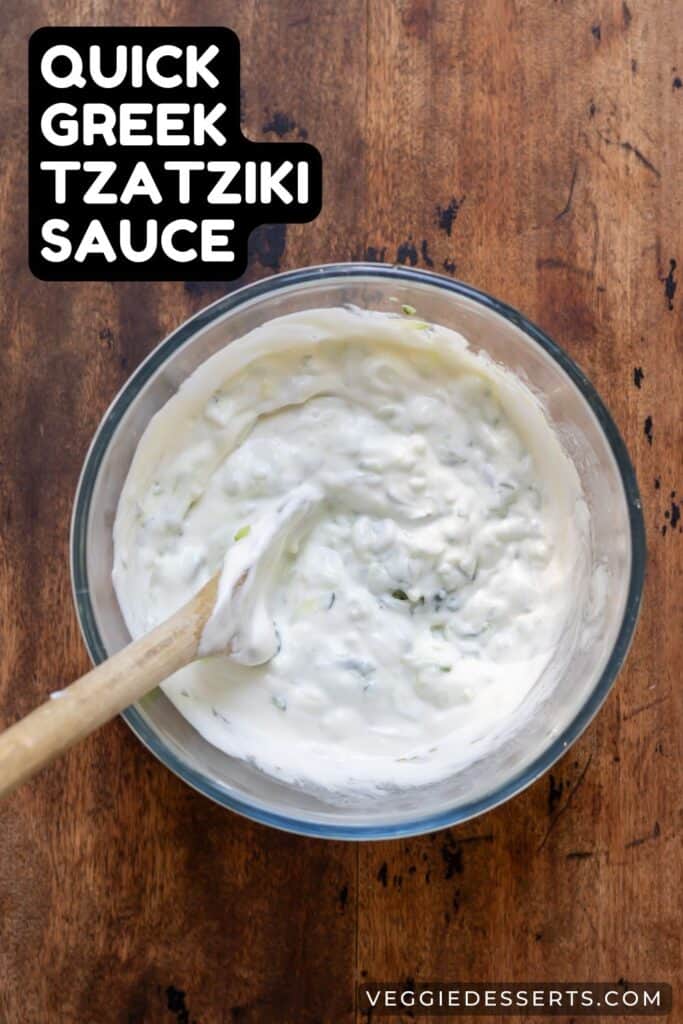
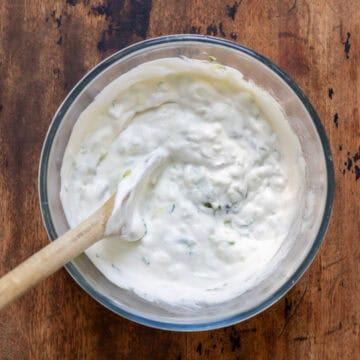
Learn how to make quick tzatziki sauce with Greek yoghurt, cucumber, garlic, lemon and olive oil. A cool, creamy, bold dip that's ready in minutes!
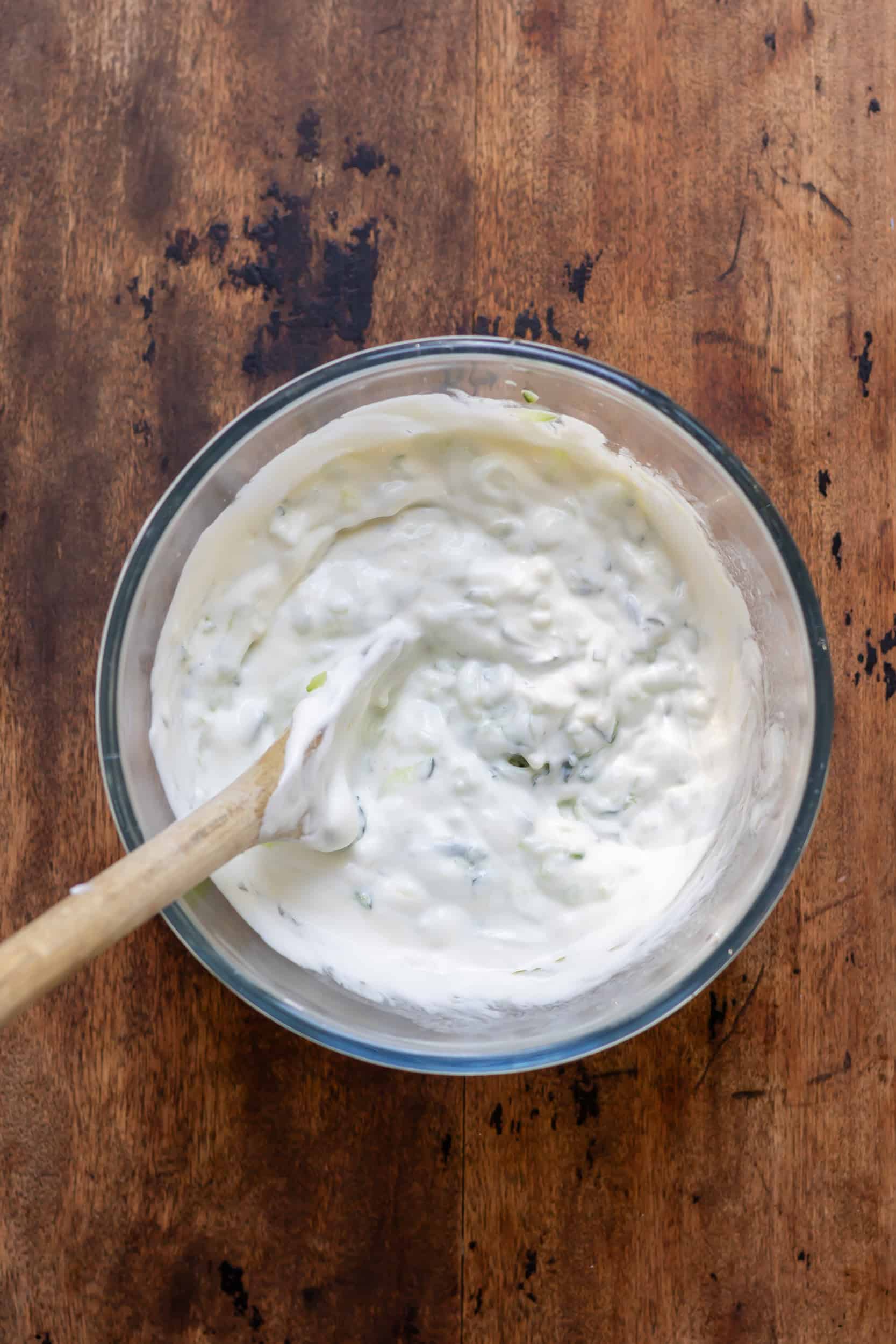
Tzatziki is one of those sauces I find incredibly useful for the amount of effort involved. Grate cucumber, squeeze it dry and stir it into thick yoghurt with garlic, lemon and olive oil.
Greek yoghurt gives it body and a gentle tang, cucumber keeps it fresh, garlic provides boldness, and lemon sharpens everything. Olive oil softens the acidity.
What matters most is controlling moisture. I've made tzatziki when I've been impatient with the cucumber, and the difference becomes particularly obvious after an hour in the fridge. Water gradually separates from the cucumber and turns an initially thick sauce surprisingly loose.
That's why I salt the cucumber first and squeeze it firmly. Don't be alarmed by how much liquid comes out.
Full-fat Greek yoghurt also makes a difference. I find it richer and more stable than thin natural yoghurt, particularly if I'm making the sauce ahead.
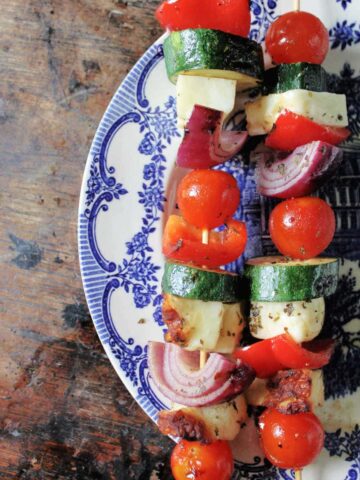
This version doesn't contain dill or mint. That's intentional. It keeps the ingredient list short and makes a useful base that works with everything from Halloumi Souvlaki to Falafel, roasted vegetables and warm 15 minute Flatbread.
You can eat the tzatziki immediately, but 30 minutes of refrigeration is worthwhile. The garlic loses a little of its raw edge, while the cucumber, lemon and yoghurt begin to taste more integrated.
The first few times I made tzatziki, I treated squeezing the cucumber as an optional extra. It looked fine when I mixed it, so I assumed I'd saved myself a job.
Then I took the bowl out of the fridge later and found a layer of cucumber liquid working its way through the yoghurt.
Since then, I spend the extra minute squeezing it properly. It's a tiny bit of effort that has more effect on the finished sauce than tinkering with almost anything else. If you don't want to squeeze it - you can put it into a colander or sieve over a bowl and let it drain for 10 minutes.
Jump to:
Why You'll Love This Recipe
- There's no cooking involved. Most of the work is simply grating and squeezing cucumber, so it's useful when the rest of dinner already needs your attention.
- It uses six basic ingredients. Nothing here is difficult to find, and fresh herbs aren't essential.
- You control the consistency. Properly drained cucumber and thick Greek yoghurt produce a substantial dip rather than a runny sauce.
- It works straight away. Chilling improves the flavour, but there's no need to wait if dinner is ready.
- It's easy to adjust. Lemon, garlic and salt can all be altered after mixing without affecting the basic recipe.
- It works with plenty of meals. I use the same batch for wraps, grilled food, grain bowls and vegetable platters.
- It can be prepared ahead. A little time in the fridge actually helps the garlic settle into the yoghurt.
Cucumber
The cucumber may look like a supporting ingredient, but its preparation controls the texture of the entire sauce.
I leave mine unpeeled. The skin adds colour and a little texture, and grating makes it fine enough that I don't find the peel intrusive. If your cucumber has particularly thick or tough skin, peeling some or all of it is completely reasonable.
Salting is useful because it helps draw moisture from the grated cucumber. Once salted, squeeze it in a clean tea towel until considerably drier than you think necessary, or place it into a sieve or colander over a bowl and let it drain for 10 minutes.
A fine or medium grater works well. Very coarse cucumber makes the sauce more like a chunky dip, while cucumber blitzed in a food processor can become watery very quickly.
If you're using a particularly seedy cucumber, you can scrape out the watery centre before grating. I don't usually bother with a standard cucumber unless the middle is unusually soft.
Ingredients
- Cucumber - I grate the cucumber unpeeled for colour and freshness. Choose one that feels firm rather than soft at the ends. The important thing isn't the exact size but removing plenty of its moisture after grating.
- ½ teaspoon salt - Salt seasons the sauce while helping draw water from the cucumber. Some will disappear with the squeezed-out liquid, so always taste the finished tzatziki before deciding whether it needs more.
- Full-fat Greek yoghurt - Use genuinely thick Greek yoghurt rather than a loose natural yoghurt if possible. Full-fat yoghurt gives the tzatziki a creamy consistency and rounds out the sharper garlic and lemon. Greek-style yoghurt can work, but brands vary considerably in thickness. If yours looks loose in the tub, draining it briefly through a fine sieve or cheesecloth helps.
- Garlic - Fresh garlic provides the characteristic savoury bite. I crush or mince it very finely so there aren't large raw pieces in the sauce. Garlic strength varies. If your cloves are particularly large or you're sensitive to raw garlic, start with one and add more after tasting.
- Extra virgin olive oil - Olive oil gives the yoghurt a smoother, richer finish. Use an extra virgin olive oil you enjoy, but there's no need to reach for your most expensive bottle.
- Fresh lemon juice - Fresh lemon juice provides acidity and makes the yoghurt taste brighter. I start with one tablespoon and adjust at the end because both yoghurt and lemons vary in sharpness.
See the recipe card for quantities.
Instructions
Follow this step-by-step photo tutorial, then scroll down to the recipe card for the full ingredients list and method.
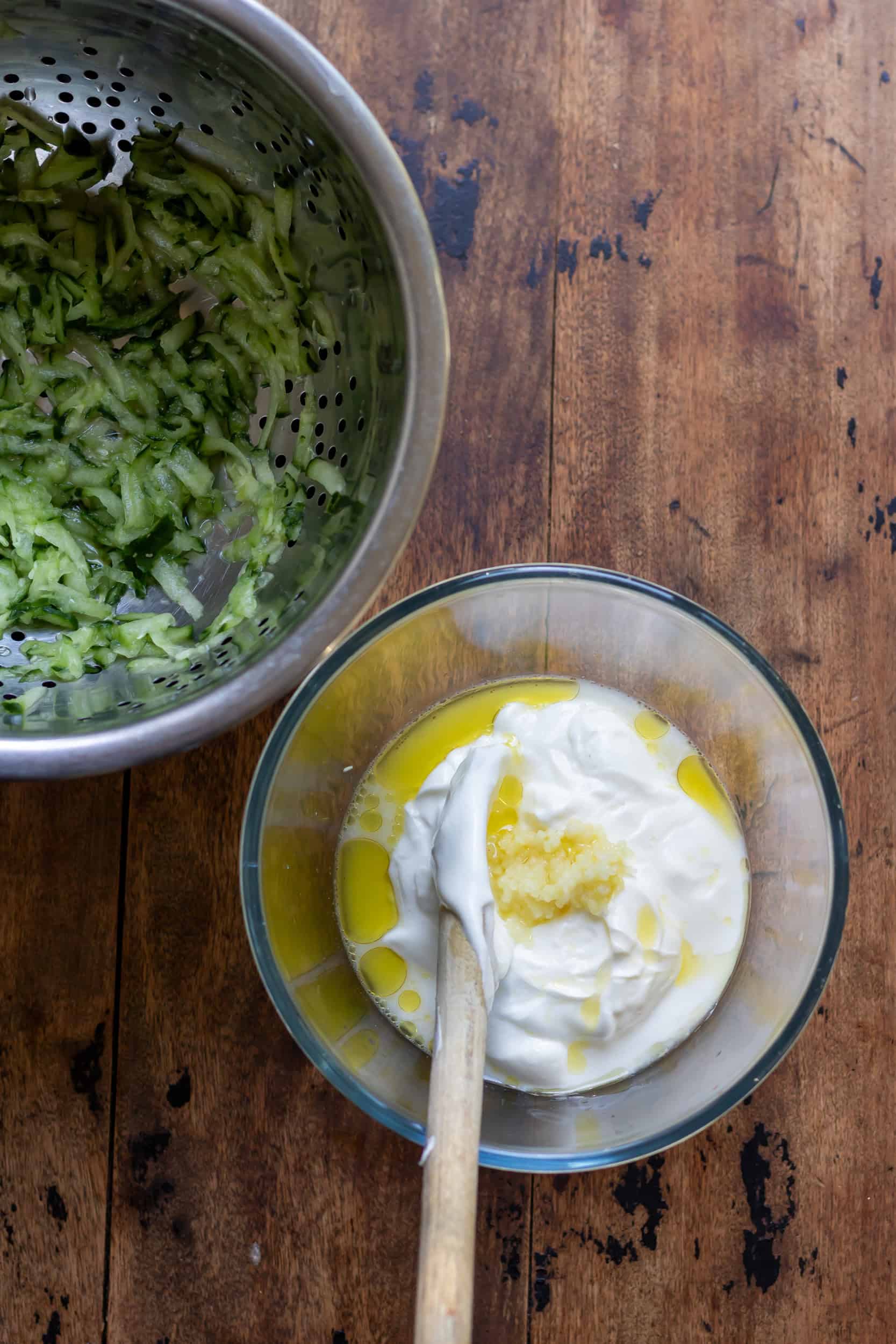
Grate the unpeeled cucumber, sprinkle it with the salt, and squeeze out as much of the excess liquid as possible using a clean tea towel or paper towels.
Add the Greek yogurt, minced garlic, olive oil and lemon juice in a small bowl.
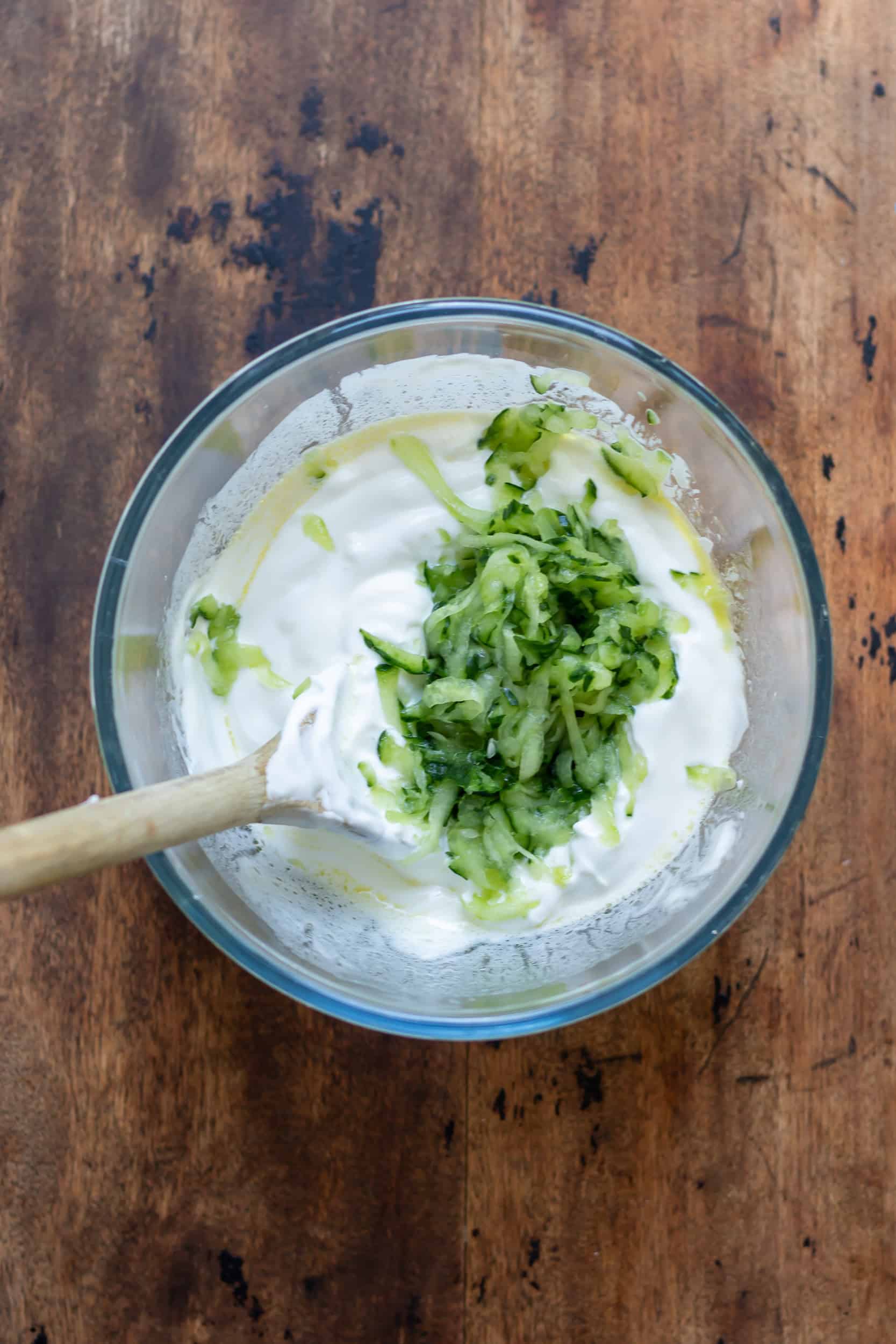
Stir the squeezed cucumber into the mixture.
Taste and adjust the salt or lemon juice if needed.
You can serve it immediately, but if you have time, chill it in the fridge for 30 minutes to let the flavors meld.
Variations
Because this is already vegetarian and gluten-free, several dietary adaptations require little or no change.
- Vegan tzatziki: Replace Greek yoghurt with a thick unsweetened plant-based Greek-style yoghurt. Coconut-based versions can add noticeable sweetness, so I prefer a neutral soy variety.
- Mint tzatziki: Add finely chopped fresh mint for a cooler, more aromatic finish. Try 1 tablespoon chopped fresh mint or ½ teaspoon dried mint.
- Dill tzatziki: Stir through 1 tablespoon fresh dill, or ½ teaspoon dried dill, for a more herbaceous sauce.
- Mint and dill: Use a little of each rather than a large quantity so the cucumber still comes through. Try 1 tablespoon of each fresh, or ½ teaspoon each dried.
- Roasted garlic version: Replace raw garlic with soft roasted garlic for a sweeter, gentler flavour.
Storage
Store: Keep tzatziki refrigerated in a clean, airtight container. I prefer a shallow glass container with a close-fitting lid because it doesn't retain garlic smells as readily as some plastics.
For best quality, I generally use homemade tzatziki within about 3 days. Some separation during refrigeration is normal. Give it a thorough stir before serving.
If it has become slightly watery, don't immediately add more yoghurt. Stir it first because the liquid often reincorporates easily.
Freezing: Tzatziki isn't something I recommend freezing. Both cucumber and yoghurt can change texture after freezing and thawing, leaving the sauce grainier and more watery.
Make Ahead: For meal prep, you can make it the evening before you need it. In fact, the flavour is often better after a few hours. Just remember that garlic develops as it sits, which is another reason not to overdo it initially.
Greek Inspired Recipes


Recipe Tips
Keep it cold. Tzatziki tastes fresher and maintains a better consistency when served well chilled.
Squeeze harder than seems necessary. The drier the cucumber is before mixing, the thicker the tzatziki remains during storage.
Choose thick yoghurt. Thin yoghurt plus cucumber moisture is the most common reason homemade tzatziki turns runny.
Mince garlic finely. Large pieces can taste unexpectedly harsh in a cold sauce.
Adjust after mixing. Yoghurt brands differ in acidity and saltiness, so fixed seasoning isn't always useful.
Give garlic time before adding more. Its flavour spreads through the yoghurt during refrigeration and can taste stronger later.
Use fresh lemon juice. Its clean acidity works particularly well in a sauce with so few ingredients.
Ways to Use Leftover Tzatziki
Leftover tzatziki rarely needs to stay in the role of a dip. I spread it onto sandwiches instead of mayonnaise, particularly with leftover roasted vegetables.
It also makes a useful base for a quick lunch bowl. Add cooked grains, chopped tomatoes, cucumber, olives and whatever cooked protein you have (I love fried tofu!), then spoon the tzatziki over everything just before eating.
I also like using leftovers alongside eggs, spooned over baked potatoes, tucked into falafel wraps or served with roasted vegetables.

Sign up for our free newsletter and never miss a recipe!
Plus, you'll get a free eBook: 15 Minute Vegan Dinners!
⭐⭐⭐⭐⭐ If you love this recipe, please leave a five-star rating and review in the comments below! And if you make any modifications, let us know how it went so that we can all benefit from your experience. Happy cooking!
📖 Recipe
Quick Tzatziki Sauce
Equipment
- Grater
- Bowl
Ingredients
- ½ cucumber unpeeled and grated
- ½ teaspoon salt
- 1 cup full-fat Greek yogurt 240g
- 2 cloves garlic minced/crushed
- 1 tablespoon extra virgin olive oil
- 1 tablespoon fresh lemon juice
Instructions
- Grate the unpeeled cucumber, sprinkle it with the salt, and squeeze out as much of the excess liquid as possible using a clean tea towel or paper towels.
- Add the Greek yogurt, minced garlic, olive oil and lemon juice in a small bowl.
- Stir the squeezed cucumber into the mixture.
- Taste and adjust the salt or lemon juice if needed.
- You can serve it immediately, but if you have time, chill it in the fridge for 30 minutes to let the flavors meld.
Notes
- Squeeze harder than seems necessary. The drier the cucumber is before mixing, the thicker the tzatziki remains during storage.
- Choose thick yoghurt. Thin yoghurt plus cucumber moisture is the most common reason homemade tzatziki turns runny.
- Mince garlic finely. Large pieces can taste unexpectedly harsh in a cold sauce.
- Adjust after mixing. Yoghurt brands differ in acidity and saltiness, so fixed seasoning isn't always useful.
- Give garlic time before adding more. Its flavour spreads through the yoghurt during refrigeration and can taste stronger later.
- Use fresh lemon juice. Its clean acidity works particularly well in a sauce with so few ingredients.
- Keep it cold. Tzatziki tastes fresher and maintains a better consistency when served well chilled.
Nutrition
The nutritional information provided is approximate and can vary depending on several factors, so is not guaranteed to be accurate. Please see a registered dietician for special diet advice.
Comments
No Comments